Quick pickled onions are nothing short of a flavor explosion! But what can you enjoy them with? Let’s paint the scene. Picture a savory pulled pork sandwich, dripping with juicy goodness, topped with crunchy quick pickled onions.
Or imagine a fresh garden salad graced with their tangy brightness. Even on a charcuterie board, these little gems shine next to meats, cheeses, and olives.
Do you fancy tacos? You’ll elevate that flavor profile when you add some crispy quick pickled onions. The slight sweetness and acidity cut through richness, balancing dishes with precision.
Serve them with grilled fish, roasted veggies, or at breakfast on avocado toast. Honestly, they can grace nearly any dish and bring a pop of flavor that you didn’t know was missing.

What are Quick Pickled Onions?
Quick pickled onions are onions that have been thinly sliced and marinated in a mixture of vinegar, water, sugar, and salt.
The process is fast—hence the name “quick”—and does not involve the long fermentation times associated with traditional pickling methods. Within a few hours, ordinary onions transform into tangy, slightly sweet, crunchy add-ons that can complement multiple dishes.
As someone who enjoys experimenting in the kitchen, I realized that quick pickled onions can elevate not just your meals but also your kitchen skills.
They introduce a culinary technique that’s accessible and rewarding. Plus, they involve only a handful of ingredients you likely already have.
Flavor Profile of Quick Pickled Onions
Let’s break down the delightful profile of these onions. First, the base flavor is the onion itself—a sharp, slightly sweet taste. When submerged in the tangy vinegar solution, the flavor transforms dramatically.
The acidity from the vinegar adds a bright note, cutting through richness and enhancing other flavors.
Then there’s the touch of sweetness from ingredients like honey or maple syrup. This balances out the acidity, making them palatable even for those who might shy away from pungent pickles.
Finally, seasonings like crushed chili flakes and mustard seeds add warmth and depth, taking these pickled onions to another level.
Why You’ll Love This
You might wonder—why should I invest my time in making quick pickled onions? Here are some compelling reasons.
Firstly, they’re a cinch to make. With just a few minutes of prep and a simple brining process, you have a condiment that packs major flavor.
Secondly, they’re incredibly versatile. As we touched on, they pair well with countless dishes. Whether you’re jazzing up a boring salad, enhancing a sandwich, or adding vibrancy to grilled meats, they elevate everything.
Lastly, quick pickled onions are an excellent way to utilize surplus onions. If you’ve got a bag sitting in your pantry, don’t let them go to waste.
You’ll be amazed at how long they last in the fridge—week after week, you’ll have a delicious topping ready to brighten your meals.
Ingredients for Quick Pickled Onions
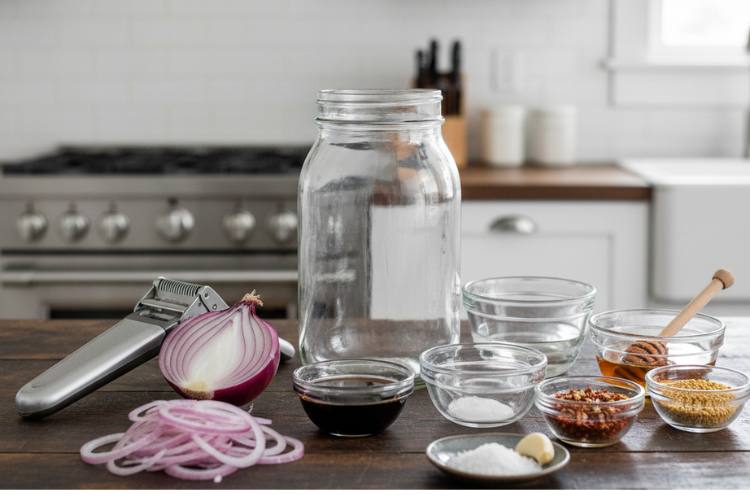
To make quick pickled onions, you’ll need:
-¼ cup raw apple cider vinegar
-¼ teaspoon crushed chili flakes
-1 small clove garlic, finely minced
-1 ½ tablespoons pure maple syrup or raw honey
-¼ cup plain white vinegar
-½ cup filtered water
-1 medium purple onion, finely shaved into thin slices
-¼ teaspoon whole mustard seeds
-1 ¼ teaspoons fine sea salt
These simple ingredients come together to create a delicious pickling solution that transforms the humble onion into a culinary delight.
Step-by-Step Instructions
Step 1: Prepare the Ingredients
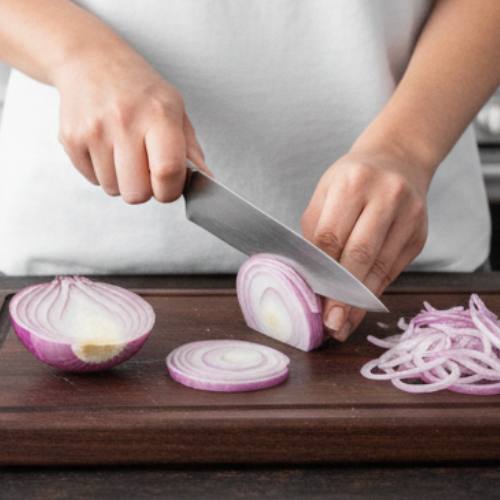
Start by gathering your ingredients. Peel and slice the medium purple onion thinly. The thinner the slice, the better. This ensures a quick pickle and a delightful crunch. Aim for about ⅛-inch thick slices.
Step 2: Make the Brine
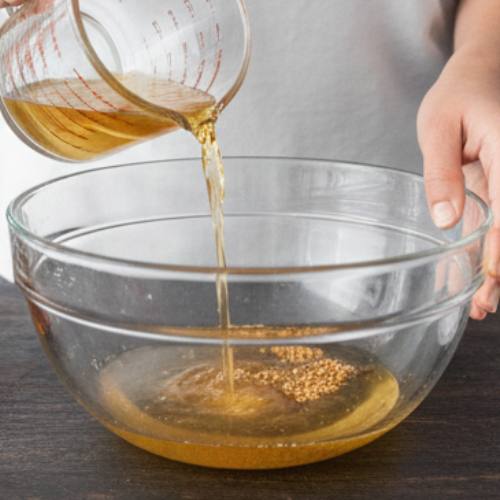
In a mixing bowl, combine ¼ cup of raw apple cider vinegar, ¼ cup of plain white vinegar, and ½ cup of filtered water. This combination creates a delightful tangy base.
Then, add 1 ½ tablespoons of maple syrup (or honey if you prefer) for sweetness, alongside 1 ¼ teaspoons of fine sea salt for seasoning.
Step 3: Add Flavor Infusions
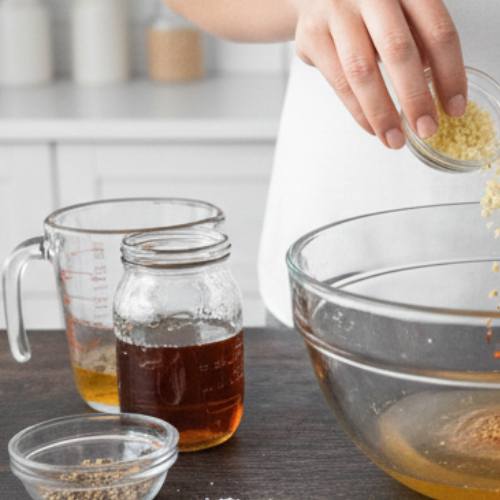
To amp up the flavor, toss in the finely minced garlic, crushed chili flakes, and whole mustard seeds into the brine. These ingredients contribute complexity. Ironically, this pickle will be simple yet impressive.
Step 4: Combine the Onions and Brine
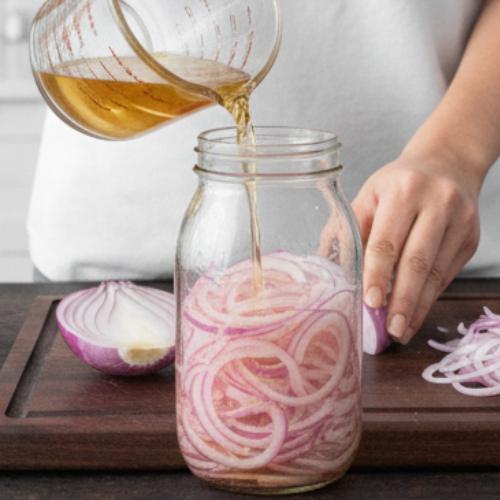
Place the sliced onions into a clean jar or bowl. Pour the brine over them, making sure the onions are fully submerged. This step is essential for effective pickling.
Step 5: Let It Rest
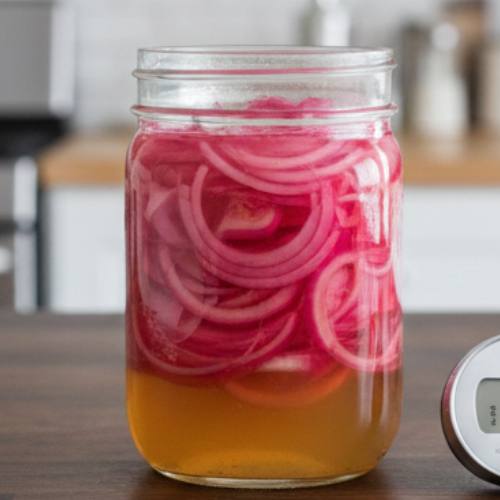
Let the onions marinate at room temperature for about 30-60 minutes. For even better flavor, let them rest in the fridge for at least a couple of hours or even overnight.
Step 6: Enjoy Your Quick Pickled Onions
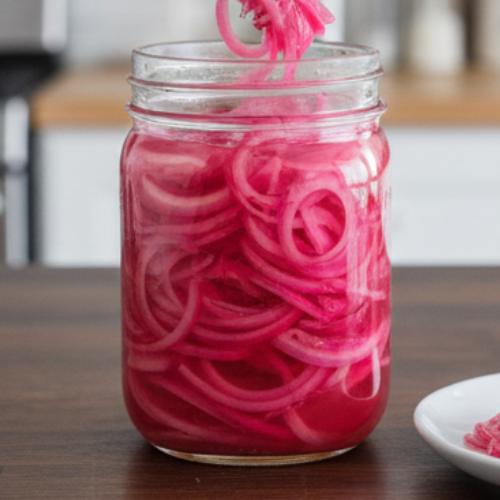
Once the pickled onions have had time to soak in the brine, they are ready to use. You’ll notice their color will change to a vibrant pink hue. This indicates they’ve absorbed the flavors beautifully.
Tips & Tricks
Here are some handy tips to ensure your quick pickled onions turn out perfectly:
- Use Fresh Ingredients: Always opt for fresh onions; their crispness is what makes them delightful.
- Experiment with Sweetness: Adjust the amount of maple syrup or honey to suit your taste preferences.
- Culling Leftovers: If you have leftover brine, consider adding other vegetables like cucumbers or radishes for a new variation.
- Adjust Thinning: Feel free to play with the vinegar-to-water ratio for a stronger or milder flavor.
- Storing: Keep them in a sealed jar in the fridge. They should stay fresh for up to two weeks, though they’ll likely be gone long before then!
Nutrition Information
How Can You Store Quick Pickled Onions?
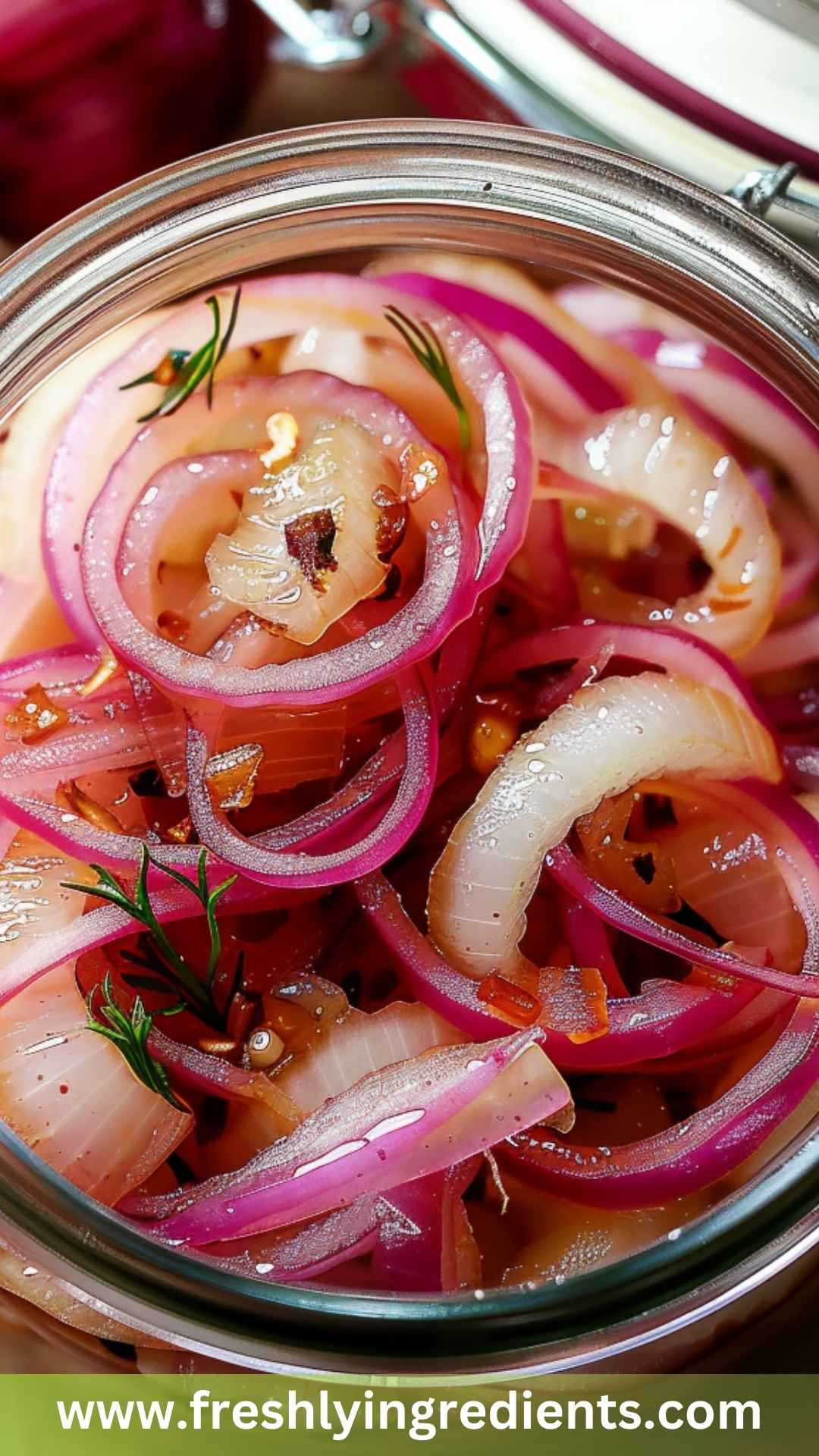
To store your quick pickled onions, ensure they’re in a tightly sealed container, preferably glass. Glass jars are ideal as they allow you to see the vibrant color. Kept in the refrigerator, they can last up to two weeks. If you notice any signs of spoilage—like off smells or unexpected changes in color—it’s wise to discard them.
Alternative Choices for Ingredients
If you don’t have some ingredients on hand, here are alternatives:
- Vinegar Variations: If you don’t have apple cider vinegar or white vinegar, white wine vinegar works well too. This type has a milder taste.
- Sweeteners: Instead of maple syrup or honey, you can use agave nectar or even brown sugar. All options will give your onions a sweet touch.
- Spice Alternatives: If you’re not a fan of mustard seeds or want a kick, consider adding black peppercorns or even cumin seeds for a different profile.
Conclusion
Quick pickled onions are a kitchen innovation that I truly cherish. They offer an easy yet impactful way to enhance your meals.
With minimal effort, you can turn ordinary dishes into extraordinary flavor experiences. You get that satisfying crunch, a delightful zing, and a new skill to show off during gatherings.
Take the plunge. Dive into this recipe, and before long, you’ll be pickling onions (and other veggies) like a pro. Your kitchen will come alive with flavors, and your tastebuds will thank you. Enjoy every pickled bite!
You’ll also like the following recipes!

Quick Pickled Onions Recipe – Freshly Ingredients
Description
Let’s talk about quick pickled onions. You might have seen them in trendy cafés or fancy restaurants, but they are deceptively easy to make at home. I remember the first time I had them—it was a game changer.
One bite, and I realized just how much more a simple onion could offer. After that moment, I was on a mission. Not only did I want to recreate that taste, but I also wanted to experiment with my twist on the classic recipe.
Over time, I discovered that pickling is not just a way to preserve food; it’s an invitation to transform it into something extraordinary.
Quick pickled onions are versatile, vibrant, and surprisingly simple to whip up. Trust me, you’ll want these zesty delights in your fridge at all times. After all, who doesn’t want a burst of flavor in every bite?
Ingredients
Instructions
Step 1: Prepare the Ingredients
-
Start by gathering your ingredients. Peel and slice the medium purple onion thinly. The thinner the slice, the better. This ensures a quick pickle and a delightful crunch. Aim for about ⅛-inch thick slices.
Step 2: Make the Brine
-
In a mixing bowl, combine ¼ cup of raw apple cider vinegar, ¼ cup of plain white vinegar, and ½ cup of filtered water. This combination creates a delightful tangy base.
Then, add 1 ½ tablespoons of maple syrup (or honey if you prefer) for sweetness, alongside 1 ¼ teaspoons of fine sea salt for seasoning.
Step 3: Add Flavor Infusions
-
To amp up the flavor, toss in the finely minced garlic, crushed chili flakes, and whole mustard seeds into the brine. These ingredients contribute complexity. Ironically, this pickle will be simple yet impressive.
Step 4: Combine the Onions and Brine
-
Place the sliced onions into a clean jar or bowl. Pour the brine over them, making sure the onions are fully submerged. This step is essential for effective pickling.
Step 5: Let It Rest
-
Let the onions marinate at room temperature for about 30-60 minutes. For even better flavor, let them rest in the fridge for at least a couple of hours or even overnight.
Step 6: Enjoy Your Quick Pickled Onions
-
Once the pickled onions have had time to soak in the brine, they are ready to use. You’ll notice their color will change to a vibrant pink hue. This indicates they’ve absorbed the flavors beautifully.
Nutrition Facts
Servings 2
- Amount Per Serving
- Calories 25kcal
- % Daily Value *
- Total Fat 0.1g1%
- Sodium 1749mg73%
- Total Carbohydrate 5g2%
- Sugars 4g
* Percent Daily Values are based on a 2,000 calorie diet. Your daily value may be higher or lower depending on your calorie needs.
Note
- Use Fresh Ingredients: Always opt for fresh onions; their crispness is what makes them delightful.
- Experiment with Sweetness: Adjust the amount of maple syrup or honey to suit your taste preferences.
- Culling Leftovers: If you have leftover brine, consider adding other vegetables like cucumbers or radishes for a new variation.
- Adjust Thinning: Feel free to play with the vinegar-to-water ratio for a stronger or milder flavor.
- Storing: Keep them in a sealed jar in the fridge. They should stay fresh for up to two weeks, though they'll likely be gone long before then!