
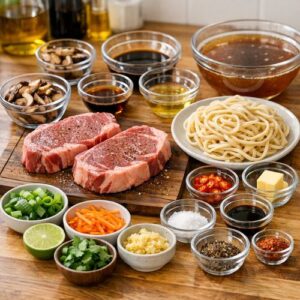
Ingredients
Method
Step 1: Prep Everything First (The Mise en Place Shortcut)
- Gather all your ingredients and prepare them before you start cooking. This isn't just organization—it's the secret to restaurant-quality results. When you're not frantically chopping while something burns, you can focus on technique and timing. Mince your garlic and ginger fresh (never use pre-minced; the volatile compounds that give them flavor and health benefits oxidize within hours). Slice your peppers into even ¼-inch strips so they cook at the same rate. Slice your spring onions, separating whites from greens—you'll add them at different times for better flavor distribution. Pat your beef strips completely dry with paper towels. This single step is why your meat will sear instead of steam. Moisture is the enemy of browning. Toss the dry beef with cornstarch and Chinese five-spice, using your hands to coat evenly. This creates a light crust that seals in juices and develops color.
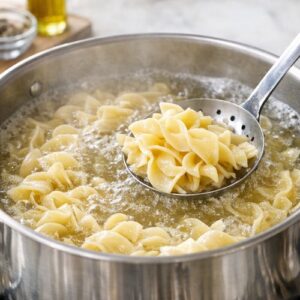
Step 2: Cook Your Noodles (The Timing Foundation)
- Bring a large pot of salted water to a rolling boil. Add your egg noodles and cook according to package directions—usually 7-9 minutes—until just past al dente. You want them tender but still slightly firm because they'll continue cooking when you toss them with the hot steak and sauce. Drain well but don't rinse—the surface starch helps the sauce adhere. Set the drained noodles aside in a large bowl while you cook the steak. Timing is crucial here: everything else happens quickly.
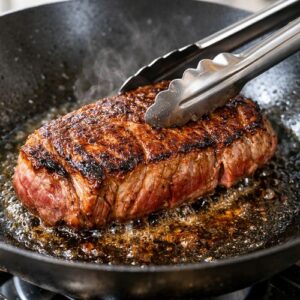
Step 3: Sear the Beef Until Golden (Building Deep Flavor)
- Heat 1 tablespoon of sunflower oil in a large wok or 12-inch skillet over medium-high heat until it shimmers (you should see the oil move like water, not sit thick). Working in two batches so you don't crowd the pan, add your beef in a single layer. Don't stir for the first 2-3 minutes—let it sit undisturbed so the bottom develops a golden crust. This is the Maillard reaction happening, where proteins and sugars bond to create complex flavors. After 2-3 minutes, stir and cook another 1-2 minutes until the beef is browned on most sides but still slightly pink inside. Beef continues cooking from residual heat, so pull it from the pan while it's still tender. Transfer to a clean plate. Repeat with the second batch, adding the remaining oil.
Step 4: Build Your Sauce Foundation (Aromatics First)
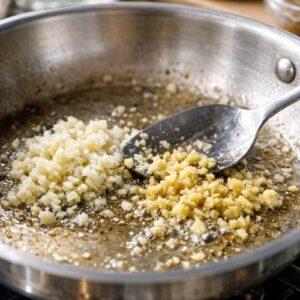
- In the same pan, add your minced garlic and ginger. Stir constantly for 30 seconds—just long enough for the oil to carry their flavors through the pan without letting them brown and turn bitter. This is where your kitchen smells like a restaurant. Add your bell pepper strips and the white parts of your spring onions. Cook for 2-3 minutes, stirring frequently, until the peppers are just beginning to soften but still have slight firmness. They should still be bright green, not dull.
Step 5: Create the Sauce and Combine Everything
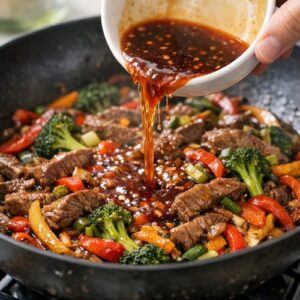
- In a small bowl, whisk together your soy sauce, rice vinegar, sweet chili sauce, tomato paste, and water. Pour this mixture into the pan with the vegetables and stir well. The sauce should immediately start to thicken and coat the vegetables. Cook for 1-2 minutes, stirring constantly, until the sauce reaches a glossy consistency that clings to ingredients rather than pooling at the bottom. Return the beef to the pan along with any juices that accumulated on the plate. Add the green parts of your spring onions and your fresh red chili. Toss everything together for 30 seconds just to warm through and combine flavors.
Step 6: Final Plating (The Last Texture Decision)
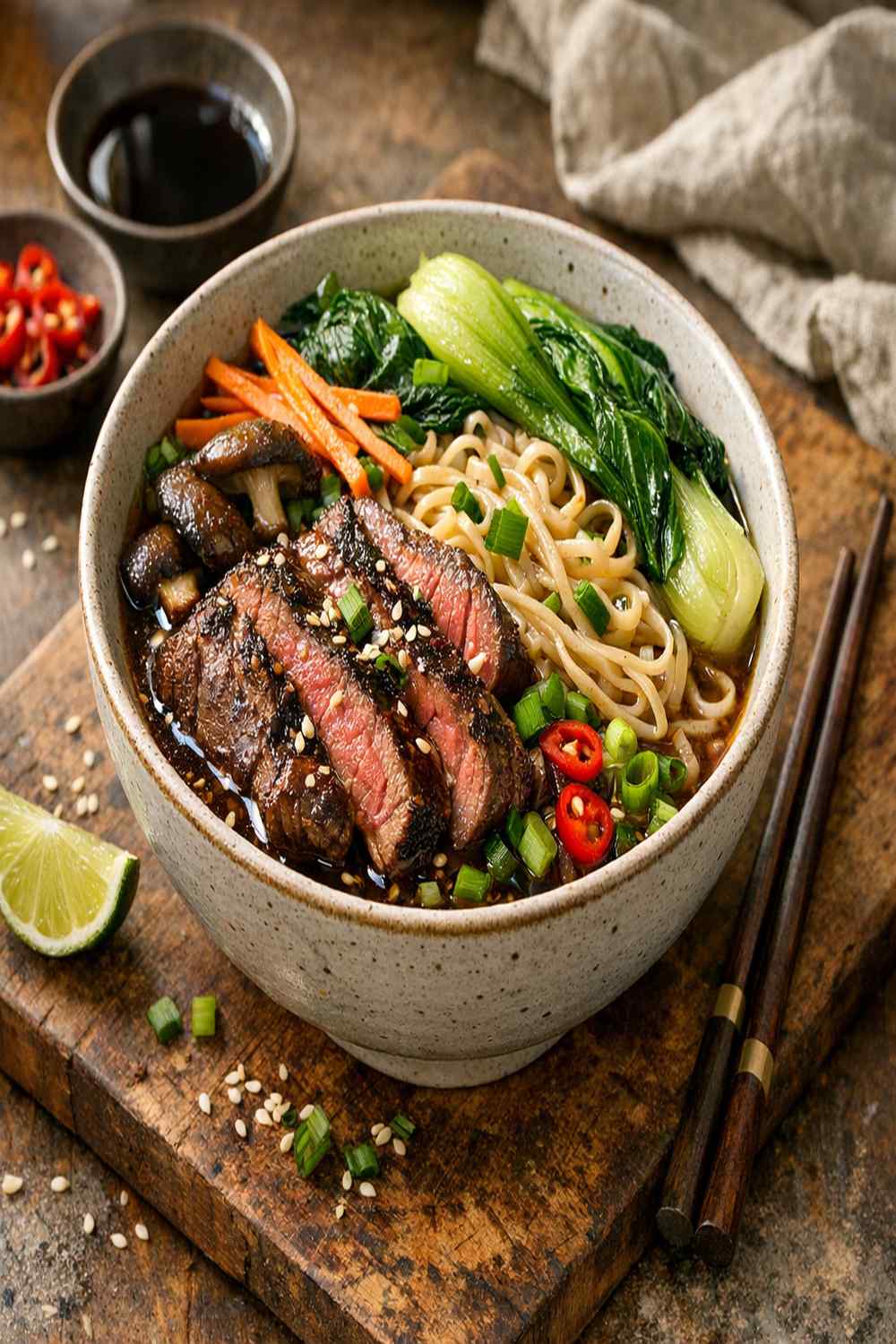
- Transfer your noodles to a large serving bowl or individual bowls. Pour the beef mixture with all its sauce directly over the noodles. Toss gently with two forks so the sauce coats every noodle. Taste and adjust seasoning with a pinch of sea salt if needed—remember, soy sauce is already salty, so add conservatively. Serve immediately while the noodles are still warm and the peppers retain their texture. The longer it sits, the more the noodles absorb sauce and soften. If you're meal-prepping, keep components separate until serving.
Notes
- Skipping the drying step on beef: Wet meat steams instead of sears. You won't develop the golden crust that creates actual flavor. Pat it completely dry with paper towels, and your results improve dramatically.
- Overcrowding the pan when searing: If you throw all the beef in at once, the temperature drops and meat releases moisture instead of browning. Two batches takes 2 extra minutes but creates exponentially better flavor. Never skip this for speed.
- Cooking vegetables until they're soft: The magic happens when peppers still have slight firmness and snap slightly when you bite them. Overcooked vegetables become mushy and lose nutrients. 2-3 minutes is usually perfect—watch them, don't time them.
- Using pre-minced garlic and ginger: The convenience costs you. Pre-minced products have oxidized and lost most of their volatile compounds—the parts that give them flavor and health benefits. Mincing fresh takes 60 seconds and transforms the dish. It's worth it every single time.