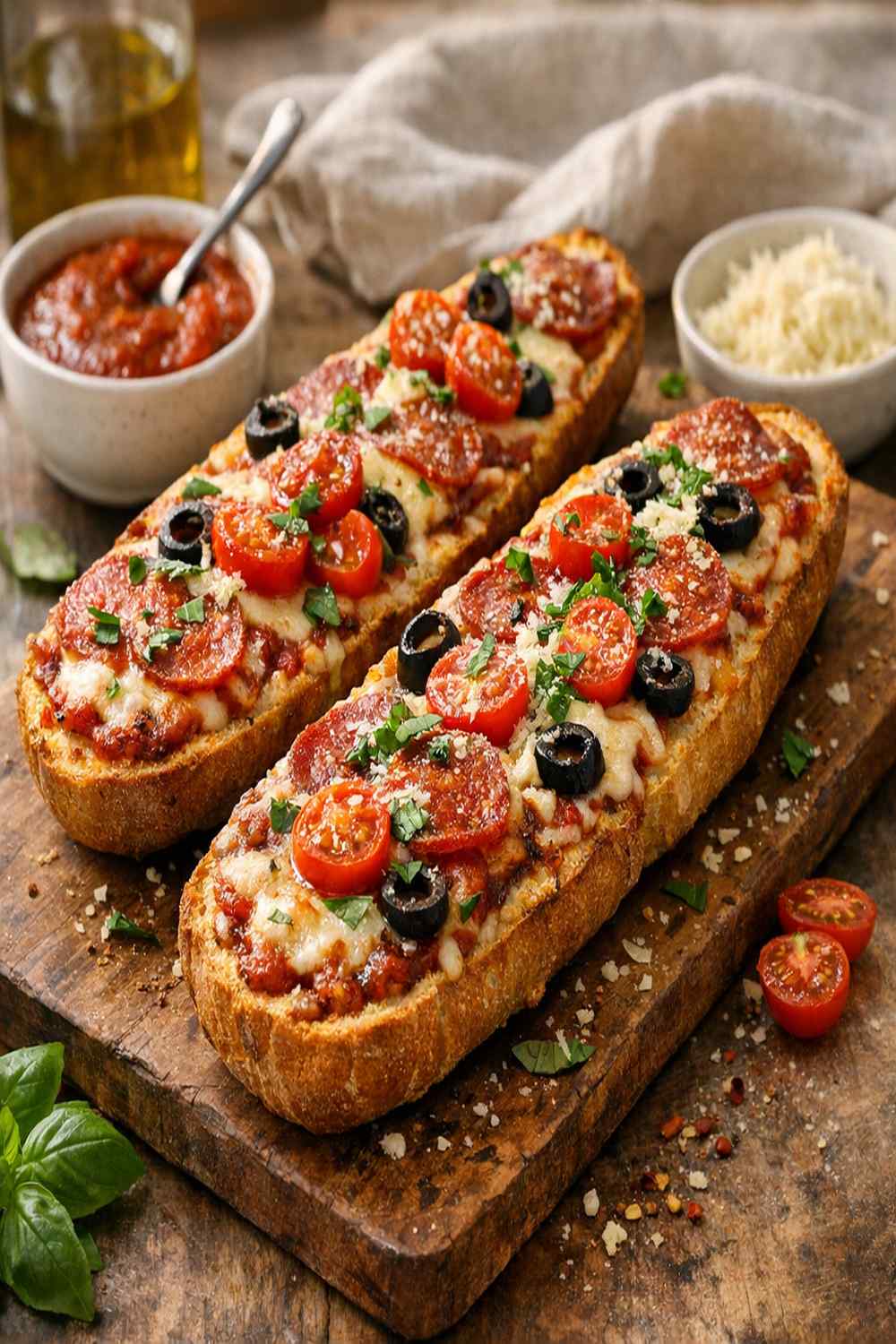

Ingredients
Method
Step 1: Preheat Your Oven and Prepare Your Workspace
- Start by setting your oven to 425°F (220°C). Don't skip the preheating—your oven needs consistent, established heat so the bread toasts evenly while cheese melts at the right pace. While it preheats, take out a cutting board and serrated bread knife. Clear a small workspace for assembling.
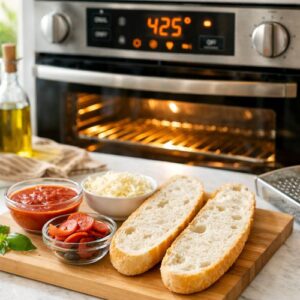
Step 2: Cut and Toast the Baguette
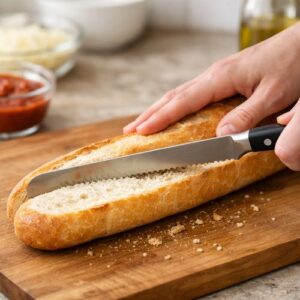
- Once your oven reaches temperature, carefully slice the baguette lengthwise into two equal halves using a serrated knife (the sawing motion prevents crushing the interior). This lengthwise cut is essential—it creates a large, flat surface for toppings while the crust on one side holds structure. Lightly brush the cut side of each baguette half with olive oil—about 1 tablespoon per half. This oil layer will prevent sauce from soaking directly into the bread while adding richness. Place both halves cut-side up on your baking sheet and slide into the preheated oven for exactly 3 minutes. You're looking for the bread to turn from pale to light golden, not brown. This protective crust prevents sogginess.
Step 3: Mix Your Sauce Base
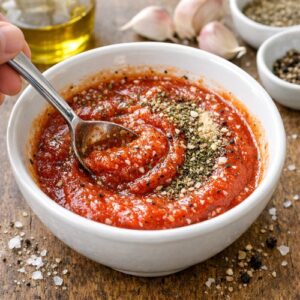
- While bread toasts, combine your tomato passata with garlic granules, dried oregano, and a pinch of sea salt and black pepper in a small bowl. Stir thoroughly so the garlic granules hydrate fully—about 1 minute of mixing. Taste it. The sauce should smell aromatic and taste balanced, slightly salty. This is your foundation, and getting it right takes 2 minutes.
Step 4: Spread Sauce Evenly Across Toasted Bread
- Remove the baguette halves from the oven (they should be warm and slightly crisp). Divide your sauce between the two halves, spreading it in a thin, even layer using the back of a spoon or a small spatula. The key word here is thin—about 1/8 inch thickness. Too much sauce overwhelms the bread; too little leaves it dry. Work quickly so the bread stays warm.
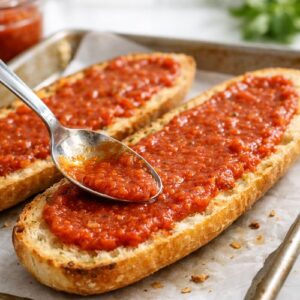
Step 5: Layer Cheese as Your Adhesive Base
- Sprinkle about half of your freshly grated mozzarella evenly across both sauce-covered baguette halves. This cheese layer acts as glue for your toppings, preventing them from sliding off during baking and creating those beautiful, melted pockets of flavor. Don't skip this base layer—it's the difference between professional-looking pizza and toppings that slide around.
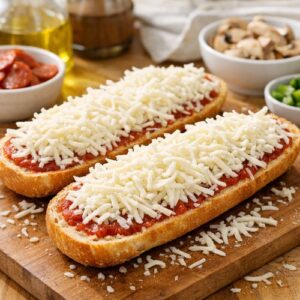
Step 6: Arrange Your Toppings Strategically
- Now add your chosen toppings in this order: mushrooms, onions, bell peppers, then shredded chicken. Why this sequence? Harder vegetables go down first so they cook through properly. Proteins go on top so they don't dry out. Distribute toppings evenly—don't pile them in the center. This ensures every bite tastes the same and toppings cook uniformly. Top everything with the remaining mozzarella cheese. This final cheese layer will brown beautifully and seal in all your toppings.
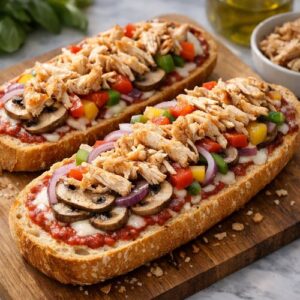
Step 7: Bake Until Golden and Melted
- Slide both baguette halves back into the preheated 425°F oven. Bake for 12-15 minutes, checking at the 12-minute mark. You're looking for three specific signs of doneness: the cheese is bubbly and beginning to brown at the edges, the bread has turned golden-brown underneath, and when you press the top lightly, it springs back slightly (not hard, not soft). All ovens heat differently. Your oven in an older Anchorage home behaves differently than a newer convection model. That's why visual cues matter more than exact timing.
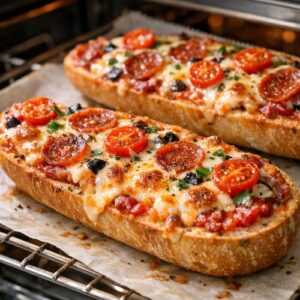
Step 8: Rest and Finish With Fresh Basil
- Remove the baguette pizzas from the oven and let them rest on a cutting board for 2 minutes. This brief rest allows the cheese to set slightly, making cutting cleaner. Tear fresh basil leaves over the top just before serving. Fresh herbs added after cooking preserve their bright flavor and nutritional content—heat destroys both.

Notes
- Skipping the pre-toast step - The bread absorbs all sauce moisture and becomes soggy by the time cheese melts. Solution: Always toast the cut side first, even if it feels unnecessary. That 3-minute step is non-negotiable.
- Applying sauce too thickly - This creates wet, heavy pizza that feels more like bread soup than pizza. The sauce should be thin enough to see the toasted bread through it. Think sauce as seasoning, not as a layer.
- Overloading with toppings - Too many toppings prevent even cooking and make the bread soggy under their weight. Stick to 3-4 toppings maximum per pizza half. Quality over quantity.
- Using pre-shredded cheese - Anti-caking agents prevent that creamy melt. Always grate cheese fresh from a block. Yes, it takes 2 extra minutes. Yes, it completely transforms the result.
- Ignoring oven temperature accuracy - If your oven runs hot, your crust burns before cheese melts. Use an oven thermometer (they're $8) to know your actual temperature, then adjust accordingly.