
Ingredients
Method
Step 1: Prep Your Aromatics While the Skillet Heats
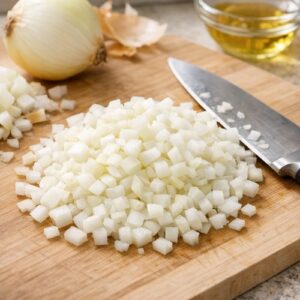
- Dice both yellow onions into small, even pieces—about ¼-inch cubes. This takes maybe three minutes with a sharp knife, and uniform pieces cook evenly. Pro move: chill your knife under cold water for 30 seconds first; it makes cutting through onions cleaner and reduces the tear-inducing compounds released into the air. Place the diced onions in a small bowl and set aside. While you're doing this, place your large deep skillet over medium heat with the olive oil. The oil should shimmer gently—not smoke—when you're ready to add the beef.
Step 2: Brown the Ground Beef and Soften the Onions Together
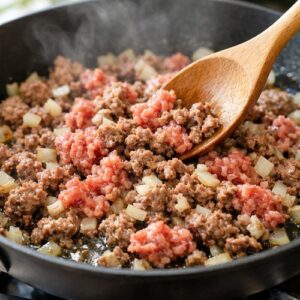
- Once the oil is ready, add the ground beef directly to the skillet, breaking it into small pieces as it hits the hot surface. Use a wooden spoon or spatula to continuously break it apart—don't let it sit and form large clumps. After two minutes, add the diced onions to the same skillet. This is the efficiency move: everything cooks together, and the onions release their moisture to help further brown the beef. Stir regularly for five to six minutes until the beef is completely browned (no pink remaining) and the onions are soft and translucent. If significant grease has accumulated, carefully drain it into a small container (save it for cooking vegetables later in the week).
Step 3: Create Your Thickening Base With Flour
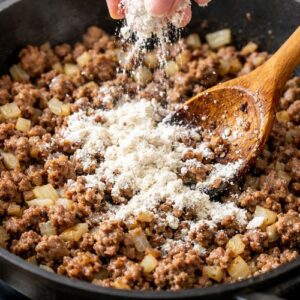
- Sprinkle the flour over the cooked beef and onions, stirring constantly for exactly one minute. You're creating a roux—a flour and fat combination that will thicken your sauce. Watch carefully; you want the flour to toast slightly and smell nutty, but not brown or burn. This step prevents lumps later and builds deeper flavor. The flour will coat the bottom of the skillet and start to stick slightly, which is exactly right.
Step 4: Deglaze and Build Your Sauce
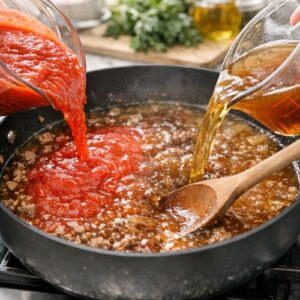
- Pour in the tomato sauce and all four cups of beef broth simultaneously. Stir vigorously for 30 seconds—you're dissolving the flour off the bottom of the skillet and creating a smooth, unified sauce. Some of the brown bits (called fond) stuck to the bottom are pure flavor; they'll incorporate into your sauce as you stir. If you see any lumps of flour, keep stirring until they disappear. The sauce should be smooth and slightly loose at this point.
Step 5: Add the Uncooked Pasta and Combine
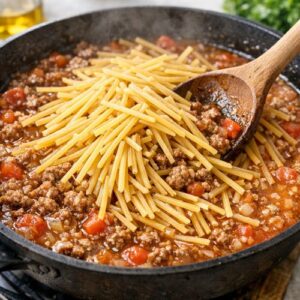
- Add the entire pound of uncooked pasta directly to the skillet. Stir well—the liquid won't cover all the pasta, and that's completely normal. Uncooked pasta will settle and absorb the broth as it cooks, and you'll stir it halfway through to ensure even cooking. The mixture should look slightly soupy and crowded. If it looks too dry, add ½ cup more broth.
Step 6: Bring to a Boil, Then Reduce Heat and Simmer
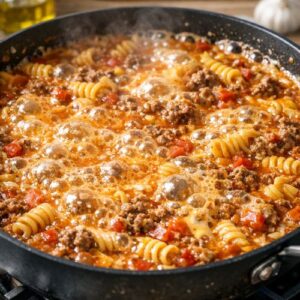
- Increase the heat to medium-high and watch the skillet carefully. You're looking for the liquid to come to a full rolling boil—this takes about three to four minutes. Once it reaches a boil, give everything a quick stir to loosen any pasta stuck to the bottom of the skillet, then place a lid on top (use a baking sheet if you don't have a skillet lid) and reduce the heat to low. This traps steam and helps the pasta cook evenly. Set a timer for 10 minutes.
Step 7: Stir and Monitor Pasta Doneness
- At the seven-minute mark, lift the lid and stir gently. The pasta should be starting to soften, and the sauce should be thickening noticeably. If the pasta seems to be drying out more than you'd like, add another ¼ cup broth. Replace the lid and continue simmering. At the 10-minute mark, check the pasta for tenderness. It should be cooked through but not mushy. If it still needs time, cook for another minute or two, but check frequently. The sauce should be thick and creamy, coating the pasta rather than swimming in liquid.
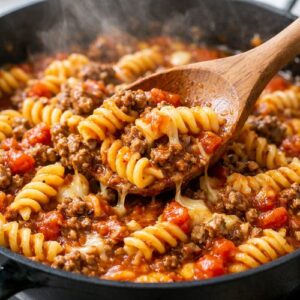
Step 8: Melt Cheese and Add Final Flavors
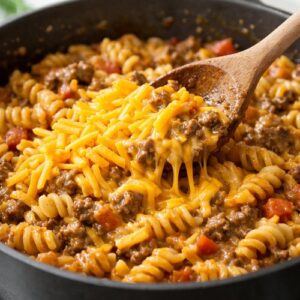
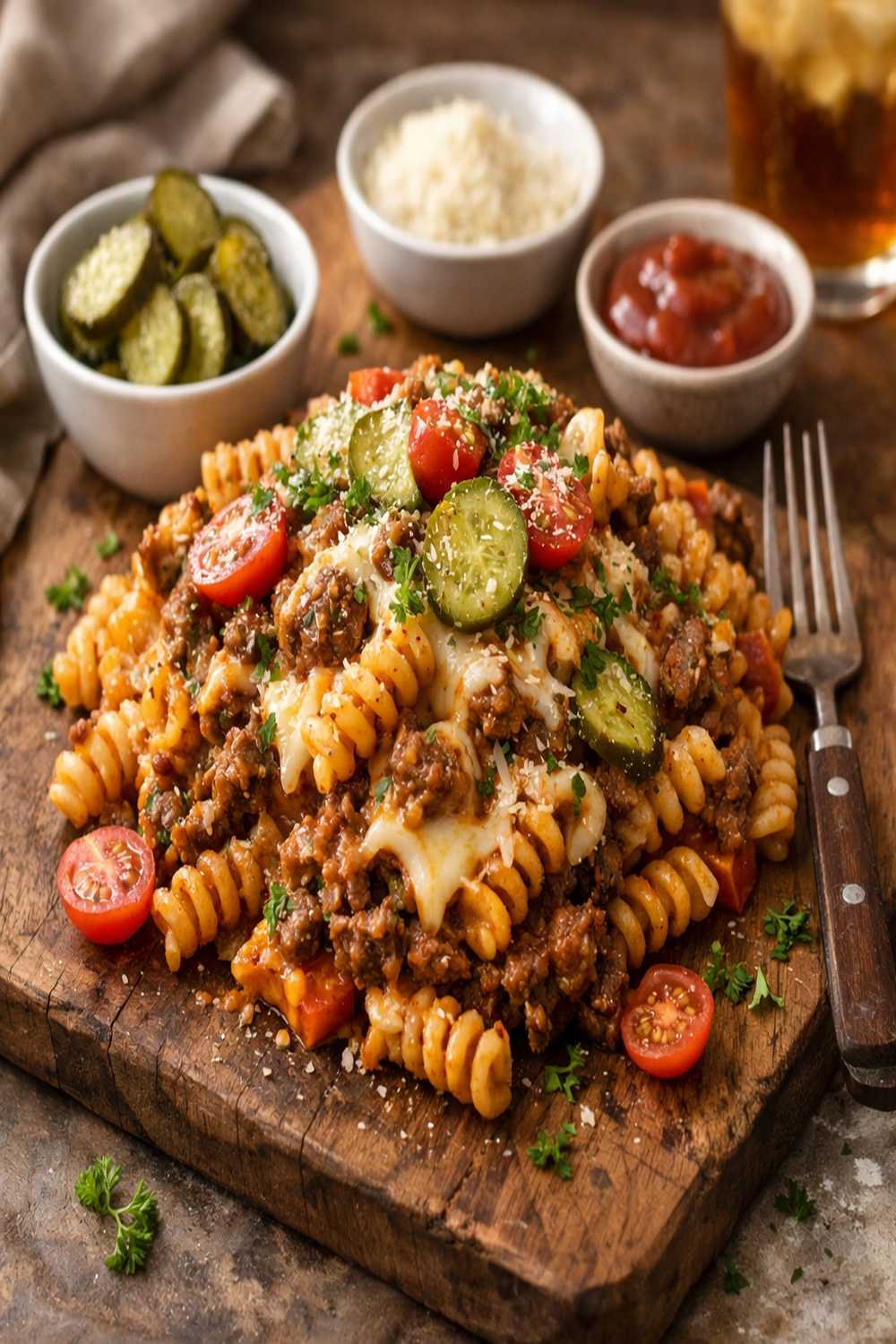
- Once the pasta is tender and the sauce has thickened to your liking, turn off the heat. Add the shredded cheddar cheese, stirring constantly until it's completely melted and incorporated. This should take 60 seconds. The residual heat will melt the cheese smoothly. Stir in the dill pickle relish—this adds tang and brightness that balances the richness of the beef and cheese. Taste and adjust seasoning with salt, pepper, and that optional garlic powder. Top with fresh-sliced green onions right before serving.