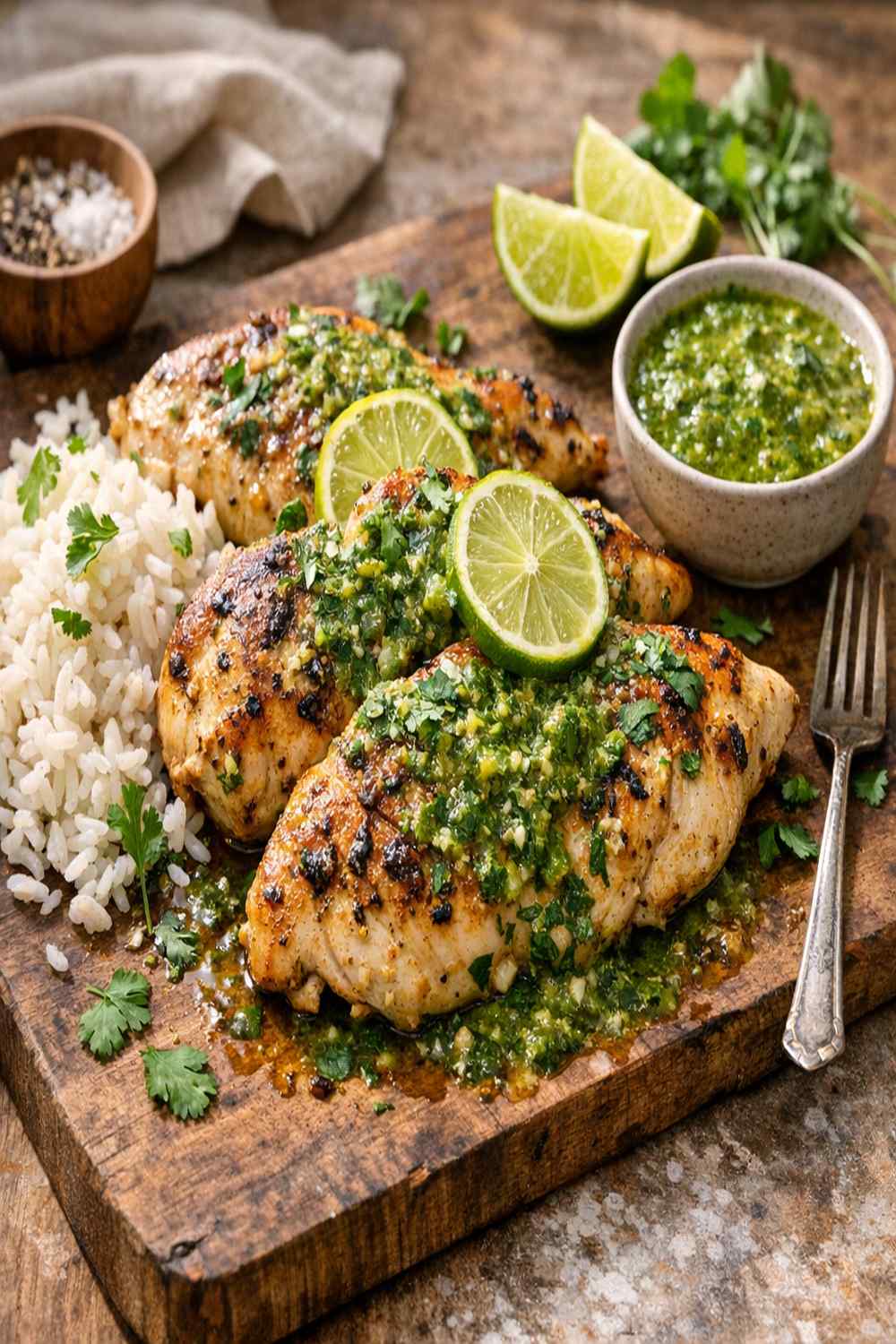

Ingredients
Method
Step 1: Prepare and Season Your Protein
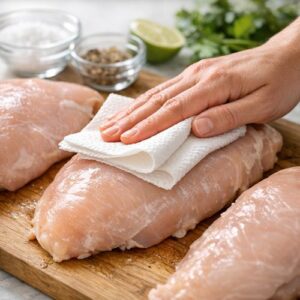
- Start by patting your chicken breasts completely dry with paper towels. This removes surface moisture that prevents proper browning—moisture creates steam, and steam prevents the Maillard reaction. If your chicken breasts are uneven in thickness (which most store-bought ones are), place them between two pieces of plastic wrap and gently pound them to a uniform 3/4-inch thickness. This ensures even cooking—thick sections won't remain undercooked while thin edges dry out. Season both sides generously with salt and black pepper, and let them sit for 2 minutes while you prepare your pan. This resting time allows salt to begin dissolving proteins, which helps them retain moisture during cooking.
Step 2: Sear the Chicken Until Golden
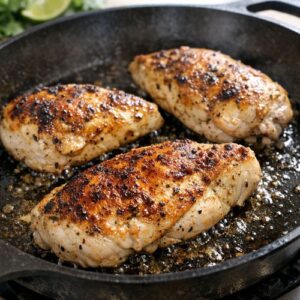
- Heat your skillet to medium-high heat with the olive oil. You'll know it's ready when a drop of water immediately sizzles and evaporates. Place the chicken breasts in the hot pan without moving them—resist the urge to fiddle. Let them sit undisturbed for 6-7 minutes, until the underside develops a deep golden-brown crust. The Maillard reaction doesn't happen quickly; it requires sustained heat and time. Flip once and sear the second side for another 3-4 minutes until equally browned. The chicken won't be cooked through yet—that's intentional. You're building flavor here, not finishing the cook. Transfer to a clean plate and loosely cover with foil to keep warm.
Step 3: Create Your Sauce Foundation Through Deglazing and Reduction
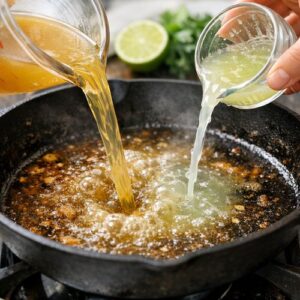
- Remove the skillet from heat (this prevents splattering and gives you better control). Pour in the chicken broth and fresh lime juice, which will immediately sizzle and release those browned, flavorful fond from the bottom of the pan. Use a wooden spoon to gently scrape and dissolve every brown bit—this is liquid gold in flavor terms. Add your diced red onion and cilantro now, plus the red pepper flakes if using. Return the skillet to medium heat and bring to a gentle boil. Here's the critical part: let this reduce uncovered for 10-12 minutes, until the liquid volume decreases to roughly 1/2 cup. You're concentrating flavors and allowing excess water to evaporate. This is why I never skip this step—it's the difference between thin, watery sauce and something velvety and substantial.
Step 4: Emulsify Cream and Butter Into Silk
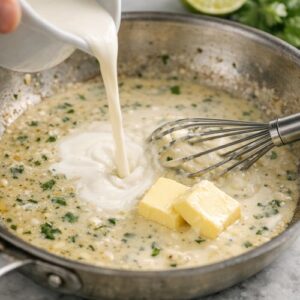
- Once your sauce has reduced to about 1/2 cup, reduce heat to medium-low. This temperature drop is crucial. Now add the heavy cream and cold butter simultaneously, stirring constantly. The cool butter entering the hot acidic liquid creates an emulsion—the fat and water molecules are held in stable suspension. Keep stirring until the butter completely melts and incorporates, about 2-3 minutes. The sauce should look silken and slightly glossy, not separated or greasy. If you maintain medium-low heat and keep stirring, this emulsion will hold beautifully.
Step 5: Finish and Bake Until Cooked Through
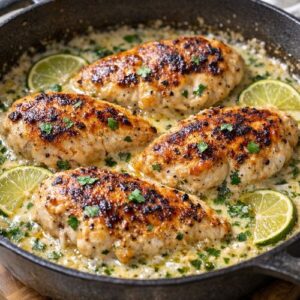
- Preheat your oven to 375°F before starting (or do this in step 1 while searing). Return the seared chicken to your sauce-filled skillet, turning each breast once to coat both sides in that beautiful cilantro-lime emulsion. Transfer the entire skillet to your preheated oven and bake uncovered for 5-10 minutes, depending on how thick your chicken is. The chicken is done when a meat thermometer inserted into the thickest part reads 165°F—not 160°F, not 170°F. 165°F is the USDA safety threshold, and it's exactly where chicken stays moist and juicy. Remove from oven, adjust salt to taste (you might want an extra pinch), and serve immediately with lime wedges and fresh cilantro garnish.
Notes
- Use an instant-read thermometer, not guessing - This removes the single biggest source of error in chicken cooking. Undercooked chicken is unsafe; overcooked chicken is dry. A $12 thermometer eliminates both problems and takes 5 seconds to use.
- Fresh lime juice changes everything - Bottled lime juice contains preservatives and lacks the bright, complex flavor compounds of fresh. I keep a mason jar of freshly squeezed lime juice in my refrigerator for up to one week, which is still incomparably better than bottled.
- Cold butter is your emulsion friend - Keep butter in the refrigerator and cut it into 4 pieces before adding to your sauce. Cold butter disperses more gradually, preventing the emulsion from breaking from sudden temperature shock.
- Taste as you go - Salt, acid, and heat are your three seasoning tools. This sauce benefits from adjusting at the end; you might find you want slightly more lime juice or an extra pinch of salt depending on your broth brand.
- The ovenproof skillet is non-negotiable - If your skillet has a plastic handle, either wrap it tightly in foil before baking or transfer the chicken and sauce to a baking dish. An oven-safe Dutch oven works beautifully too.