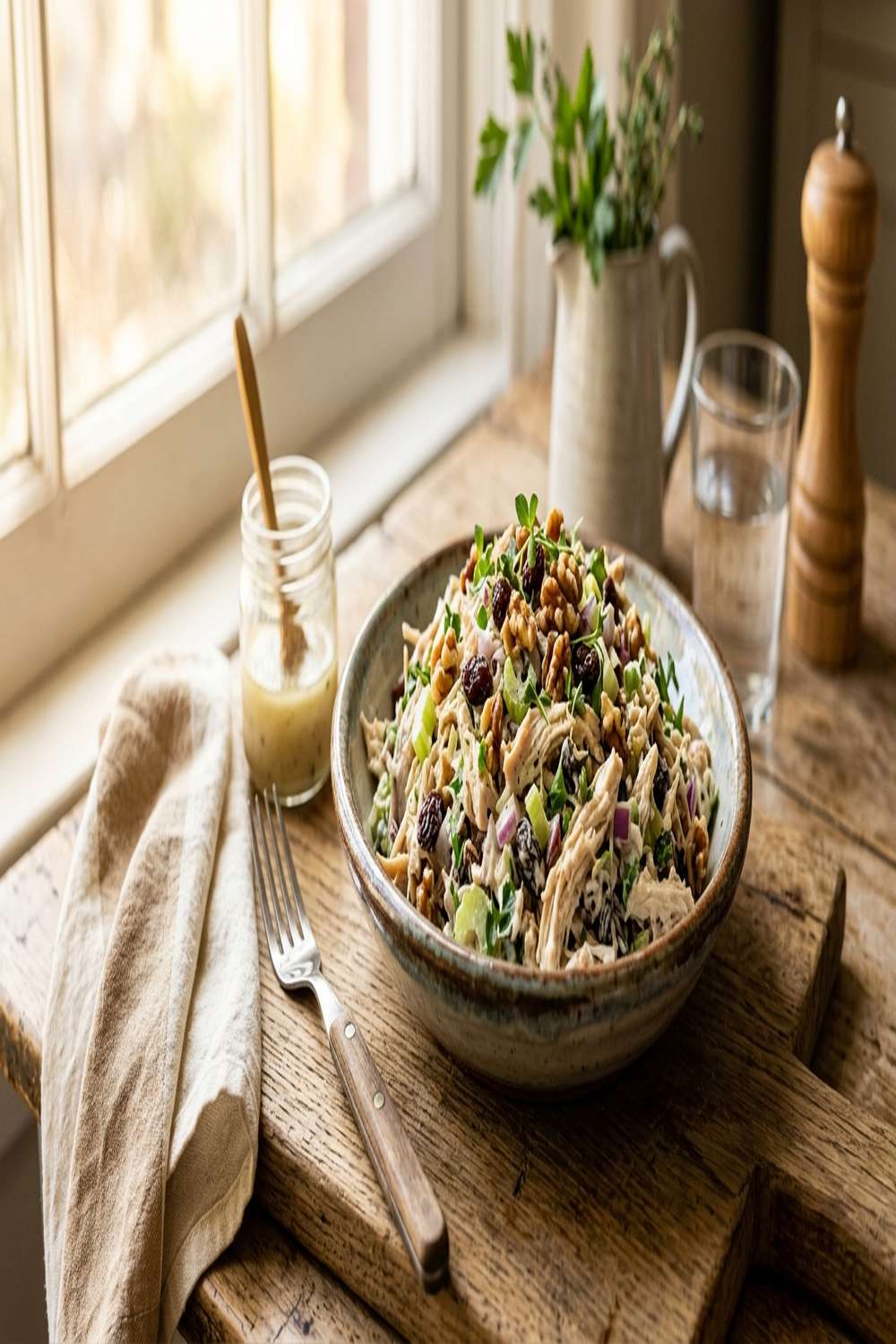
Chicken Salad With Raisins Recipe
This post contains affiliate links. As an Amazon Associate I earn from qualifying purchases.
Before you throw those leftovers away, turn them into something even better. This Chicken Salad With Raisins Recipe was born from exactly that moment—the kind of kitchen magic that happens when you refuse to waste good food. I’ve built my career on bridging nutrition science with Alaskan resourcefulness, and this recipe is proof that leftovers aren’t second-rate meals. They’re opportunities waiting to become something delicious.
What I love most about this transformation is how it meets you where you are. Whether you’ve got rotisserie chicken from the market or roasted salmon leftovers from dinner, you can turn them into a satisfying, protein-packed salad in under 30 minutes. The raisins add natural sweetness, the nuts bring texture and healthy fats, and the apples wake everything up with brightness. It’s the kind of meal that tastes intentional—even when you’re technically cleaning out your refrigerator.
How to Turn Last Night’s Leftovers Into Chicken Salad With Raisins Recipe (Better Than the Original)
My passion for this recipe started on a Tuesday afternoon in my Anchorage kitchen. I’d roasted a whole chicken for Sunday dinner, picked the meat clean on Monday, and by Tuesday morning, I was staring at what felt like the end of something. But instead of resignation, I felt possibility. I had some crisp apples from my farmers market haul, a handful of raisins in my pantry, and the realization that I could create something entirely new from what remained.
That’s when it clicked—leftovers aren’t failures of meal planning. They’re ingredients with potential. This salad became my favorite way to honor food I’d already invested time and money into, transforming it into something that felt fresh and intentional. Now, whenever I have roasted poultry, I plan this recipe before the bird even hits the table. It’s that good, and the two-day turnaround means less waste and more satisfaction.
What Leftovers Work Best
Not all leftovers are created equal for this transformation. I’ve learned through years of kitchen work which proteins and components shine here, and which ones should find different homes on your plate. The magic of this recipe is how forgiving it is—you need a blank canvas protein and ingredients that won’t fight against the sweet-savory balance we’re building.
- Roasted or poached chicken (any part) – The neutral flavor base that lets everything else sing. Dark meat actually stays moister than white, making this an especially smart way to use chicken thighs or drumsticks from two days ago.
- Turkey leftovers – Works beautifully here, offering a slightly earthier flavor that complements the apples and raisins perfectly. Thanksgiving turkey transforms into weekday lunch gold.
- Cooked salmon or other mild fish – My Alaskan heart loves this adaptation. Wild salmon leftovers create an elevated version with omega-3 fatty acids that store-bought chicken salads can’t match.
- Brined or smoked poultry – Use these sparingly, as the salt content is already higher. They add complexity, but balance carefully with your seasoning.
- Deli turkey or rotisserie chicken – Fresh from the market works wonderfully too—this recipe isn’t judgment about freshness, it’s about resourcefulness.
- Celery-heavy salads or coleslaw – Avoid using as your base leftover. The texture becomes mushy and the vinegar content competes with what we’re building here.
The Transformation Pantry: What to Keep on Hand
I’ve learned through years of nutrition counseling and Alaskan home cooking that having the right bridge ingredients on hand is what separates “I’m making do” from “I’m creating something special.” These are the items I never let my pantry run low on, because they’re the magic that transforms a tired leftover into a dish you’d actually order at a restaurant.
Mayonnaise is your foundation here—it’s what brings everything together with creaminess and richness. A good quality one makes a difference in both flavor and how well your salad holds up over multiple days. Apple cider vinegar adds brightness without overpowering, and it’s something I always have on hand for both cooking and my nutrition practice. Dried raisins are pantry gold because they’re shelf-stable, nutrient-dense, and provide natural sweetness that balances savory proteins beautifully. Raw walnuts bring healthy fats and a slight earthiness that grounds the sweeter elements. Keep them in the freezer if you’re not using them regularly—they stay fresher longer in cold storage.
Fresh apples are your wild card. I’m partial to Honeycrisps for their texture and natural sweetness, but Granny Smith apples bring tartness that’s equally beautiful here. The point is having something crisp and fresh to contrast with everything else. Salt and pepper seem obvious, but I’m particular about both—I use fine sea salt and fresh-ground black pepper because they distribute more evenly and taste cleaner.
The Ingredients – Leftovers + Bridge Ingredients
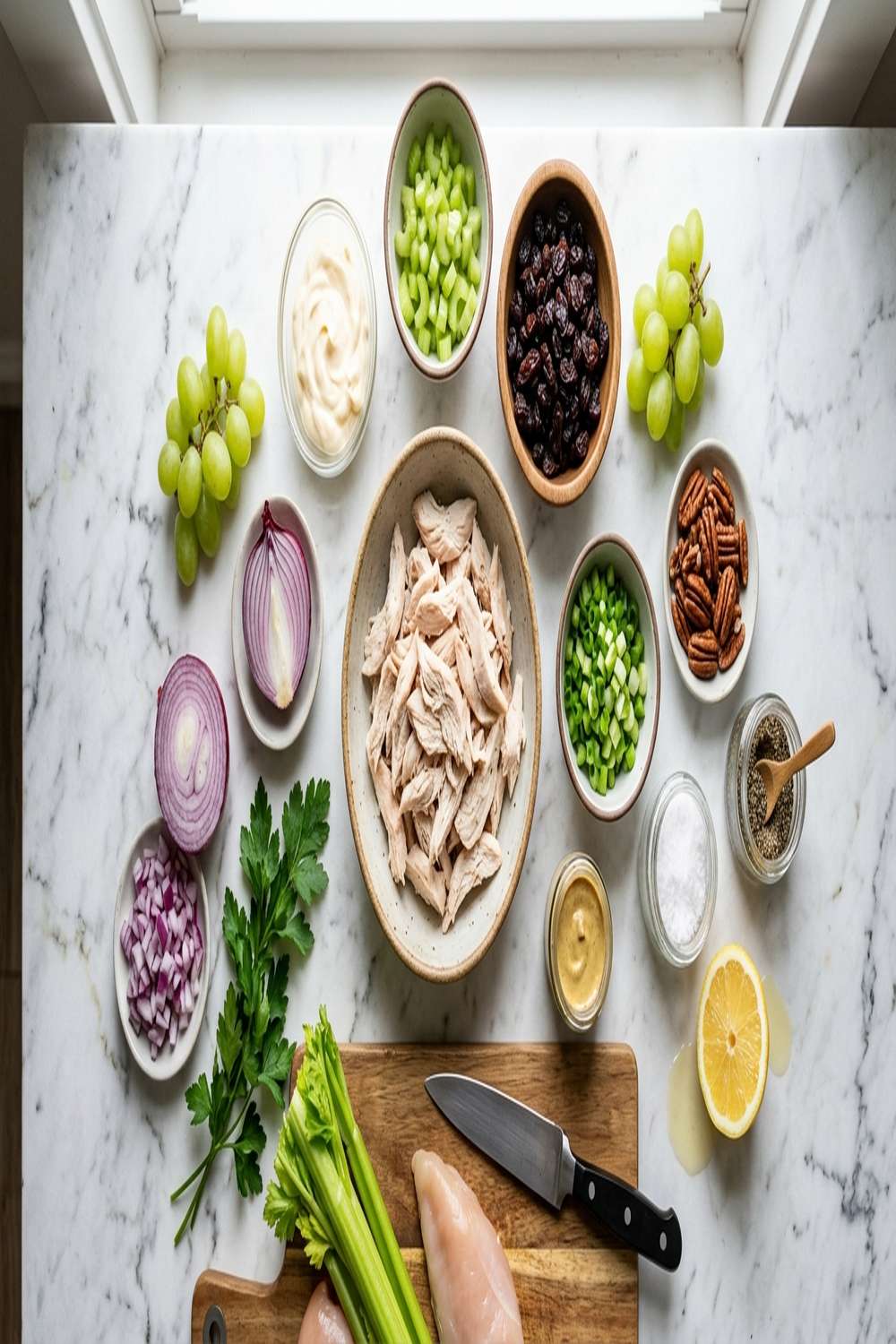
This is where your kitchen creativity meets practical nutrition. What you see here isn’t a rigid formula—it’s a framework for using what you have and adding just enough intentional ingredients to make it special. I’ve listed these by category so you can see both your leftover components and the bridge ingredients that transform them.
Your Protein Base (Leftover)
- 2 pounds cooked chicken (shredded or in bite-sized pieces, from roasted whole bird, rotisserie chicken, or poached breasts)
The Binding & Flavor Layer
- fine sea salt and freshly ground black pepper (to taste, adjusted at the end)
- 4 tablespoons apple cider vinegar (raw, with the mother if possible, for maximum nutritional benefit)
- ½ cup mayonnaise (full-fat, not reduced calorie—the fat is essential for proper emulsification and mouthfeel)
The Texture & Sweetness Elements
- 2 large apples (your choice of variety, peeled, cored, and diced into ½-inch pieces—cut just before serving to prevent browning)
- ⅓ cup raw walnuts (roughly chopped, lightly toasted for deeper flavor if you have time)
- ⅓ cup raisins (unsweetened, plump ones from a well-sealed container for maximum texture)
Optional Additions for Complexity
- 2 tablespoons fresh lemon juice (if your apples are browning while you prep, or to brighten the overall flavor)
- 1 teaspoon Dijon mustard (adds subtle depth and helps stabilize the mayo base)
Makes: 5-6 servings as a main course, or 8-10 servings as part of a composed meal with fresh greens
The Transformation: How to Make Chicken Salad With Raisins Recipe From Leftovers
This is the alchemy part—the moment your leftovers stop being yesterday’s dinner and become today’s intention. I’m going to walk you through this step by step because timing matters, technique matters, and the order you combine things actually impacts flavor distribution. In my nutrition practice, I’ve learned that when people understand the “why” behind cooking steps, they’re more likely to make dishes that nourish them. Here’s the why, alongside the how.
Step 1: Assess and Prepare Your Chicken
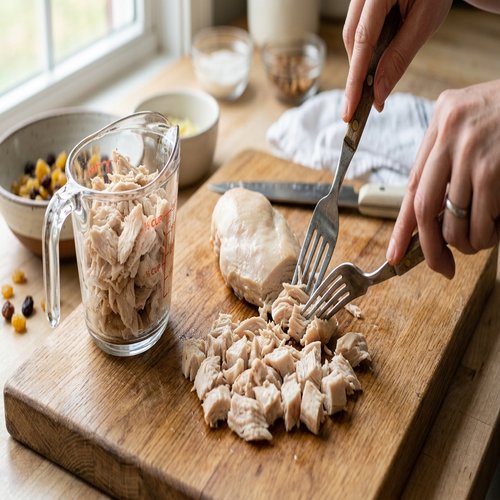
Start by examining your leftover protein. Is it still moist, or has it dried out slightly in the refrigerator? This assessment determines everything that comes next. If your chicken is dry, you’ll need a bit more mayo to restore moisture. If it’s perfectly tender, stick with the ½ cup measurement. Shred or cut your chicken into bite-sized pieces—uniform sizing ensures every forkful tastes the same. This is also when I check for any bones or cartilage that might have escaped initial removal. Takes 5 minutes, prevents regret later.
Step 2: Create Your Mayo Base
Place your prepared chicken in a large mixing bowl. Pour the mayonnaise over it and stir gently but thoroughly, making sure every piece of protein gets coated. The mayo acts as a protective barrier that keeps your salad moist and stable for days. This step shouldn’t be rushed—take time to work the mayo through so you don’t end up with dry pockets when you eat. This is where the transformation really begins, from leftover to creamy, intentional dish.
Step 3: Add Your Bridge Ingredients
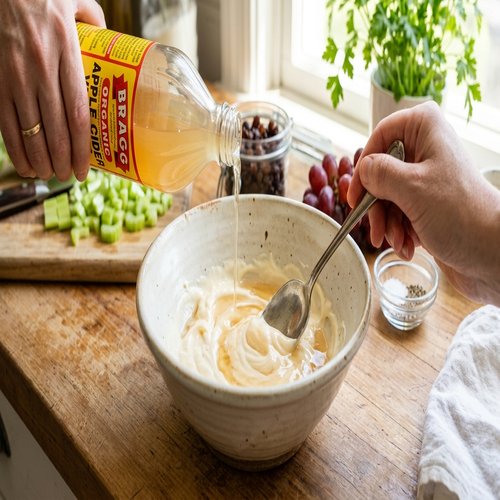
Now add the apple cider vinegar first. Stir it in completely before adding other ingredients. The vinegar will lighten the mayo slightly and create a more complex base flavor. This is about 2 minutes of gentle stirring, letting everything marry. If you’re using the optional Dijon mustard, add it now too.
Step 4: Fold In Your Fresh Elements
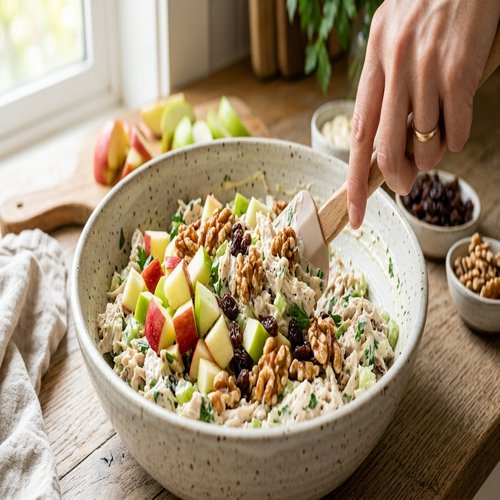
Add the diced apples, raisins, and walnuts. Fold these in gently with a spatula rather than stirring vigorously. You want to distribute them evenly without breaking down the texture of the apples or crushing the walnuts. The gentle folding motion keeps everything from turning into a mushy mess. This step takes about 3 minutes and is honestly meditative—there’s something satisfying about bringing all these elements together.
Step 5: Season Thoughtfully
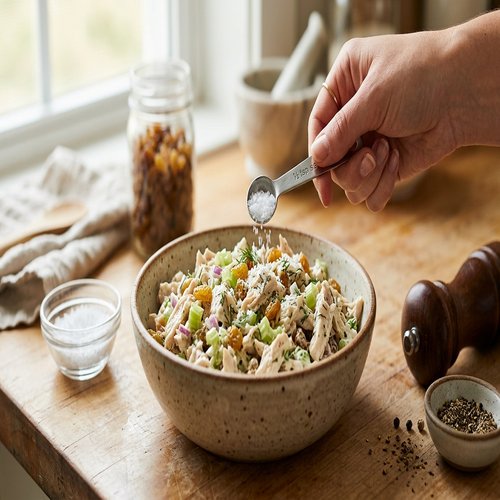
Taste your creation before adding salt and pepper. Sometimes the chicken, mayo, and apples already provide enough seasoning. Start with ½ teaspoon of salt and a few grinds of pepper, then taste again. This prevents over-salting, which is my biggest leftover transformation mistake. Add a squeeze of fresh lemon juice if you like—it brightens everything and prevents apple browning if you’re making this ahead of time.
How to Adapt Based on What You Have
- If you have fresh herbs (tarragon, dill, or parsley) – Chop ¼ cup and fold in with your apples. This adds brightness and makes the dish feel intentional rather than improvised. Tarragon especially bridges the gap between sweet and savory beautifully.
- If you don’t have walnuts – Substitute with sliced almonds, chopped pecans, or even sunflower seeds. The goal is crunch and healthy fats, so any raw nut works. Avoid heavily roasted or salted varieties that’ll compete with your flavors.
- If your apples are mealy or soft – Use them anyway, but increase the amount slightly since they’ll contribute more moisture. The raisins will provide the textural contrast you’d normally get from crisp apples.
- If you don’t have apple cider vinegar – Red wine vinegar works, though it’s slightly more assertive. Use the same amount. White vinegar is too harsh—avoid it. Rice vinegar is gentler and works in a pinch.
- If your leftover chicken is particularly salty (like from a brined bird) – Cut the mayo to ⅜ cup and use less salt when seasoning. Add a splash more vinegar to keep the creaminess balanced.
- If you’re serving this immediately – Add your apples just before serving so they stay crisp. If you’re making this ahead, add them 30 minutes before eating.
Expert’s Nutritional Tip: Why This Transformation Actually Improves Nutrition
Here’s something I always tell my nutrition clients: transformed leftovers aren’t nutritionally inferior—they can actually be superior. When you take plain leftover chicken and combine it with raw apples, walnuts, and raisins, you’re adding fiber, polyphenols, and healthy fats that the original roasted bird didn’t have on its own. The mayo provides fat-soluble vitamin absorption, which means your body can actually utilize the nutrients in those apples and raisins more effectively. According to USDA nutritional data, one serving of this salad provides approximately 18 grams of protein, 8 grams of healthy unsaturated fats, and about 4 grams of dietary fiber—making it a genuinely balanced meal, not just a way to use up leftovers.
The raisins deserve special mention here. They’re concentrated fruit—one handful provides more antioxidants than a whole apple. They’re also a prebiotic fiber, meaning they feed your good gut bacteria. This is why I consider them a bridge ingredient rather than just a flavor booster. You’re not adding sweetness whimsically; you’re adding functional nutrition that transforms leftover protein into something your body recognizes as a complete meal.
Make-Ahead Guide: Meal Prep Instructions
As a registered dietitian, I’m a passionate advocate for meals that work with your life rather than against it. This salad is exceptional for meal prep because it’s actually better after a day in the refrigerator—the flavors have time to meld and deepen.
Maximum Make-Ahead Strategy: Prepare the salad through Step 4 (everything except the apples). Store in an airtight glass container for up to 4 days. Keep your apples separate in another container with a squeeze of lemon juice to prevent browning. When you’re ready to eat, fold in fresh apples for maximum crispness and brightness. This method lets you enjoy fresh-tasting salad throughout the week without the browning and texture breakdown that comes with combining everything at once.
For Packed Lunches: Prepare the salad as directed, but pack the apples separately in a small container. Add them right before eating, or pack them in a small bag and ask colleagues to help you stay honest—turning meal prep into a moment of connection. I often suggest serving salad components separately on a bed of fresh greens for a more composed presentation that impresses even when you’re technically eating leftovers.
Freezing Consideration: Don’t freeze this salad. The mayo will separate, the apples will become mushy, and you’ll lose the very texture that makes this transformation special. Fresh refrigerator storage is your friend here.
Common Mistakes to Avoid
I’ve made all of these mistakes at least once, and learned from watching clients do them too. Here’s what I’d spare you from:
- Over-mixing at the end – This is the biggest one. People get enthusiastic and stir everything aggressively, which bruises the apples and walnuts. Fold gently. Your salad will thank you with better texture.
- Using pre-cut or browning apples – It sounds efficient, but pre-cut apples oxidize quickly and become mealy. Cut your apples right before assembling, or cut them up to 30 minutes ahead and toss with lemon juice. The acid prevents browning and adds brightness.
- Skipping the seasoning taste test – Mayo from different brands varies in salt content. Some rotisserie chickens are heavily salted. Always taste before adding more salt, or you’ll end up with something too salty to enjoy.
- Using stale raisins – Check your raisin container. If they’re hard as pebbles, they’ve been open too long. They won’t plump up or add moisture. Fresh raisins make a visible difference in how delicious this turns out.
Seasonal Variations: How to Adapt Year-Round
One of my favorite things about teaching nutrition through cooking is how seasons change what’s available, and we just adapt. This recipe is beautifully flexible across the calendar.
Spring: Replace raisins with fresh berries—blueberries or strawberries are perfect. Use spring apples if available, and add fresh tarragon or dill. This version feels lighter and cleaner, perfect when the weather warms up.
Summer: Swap apples for ripe peaches or nectarines. Add fresh basil instead of tarragon. The stone fruit and bright herbs make this feel like a summer patio meal. Consider serving it over fresh greens rather than on its own.
Fall: This is the original recipe’s season. Use Honeycrisp or Granny Smith apples, increase the raisins to ½ cup, and add toasted pecans or walnuts. Consider adding a tablespoon of pure maple syrup to the mayo base for subtle sweetness that echoes the season.
Winter: Use storage apples (Red Delicious or Fuji are sturdy), keep raisins as your primary sweetness, and consider adding dried cranberries for tartness and color. Add a pinch of cinnamon or nutmeg to the mayo base for warming spice. This version feels more substantial and comforting.
Zero Waste: Using Every Last Bit
One of my core values as a nutritionist is honoring food through complete utilization. Here’s how I use every component of this recipe:
Apple cores and peels: If you’re buying whole apples and peeling them, save those scraps. Simmer them in water with cinnamon and a few cloves for homemade apple tea. The peels are nutrient-dense, full of pectin and polyphenols. This is especially valuable if you’re dealing with organic apples that haven’t been treated with synthetic coatings.
Walnut pieces too small to use: Blend them into a powder and add to smoothies, oatmeal, or use as a flour substitute in baking. I keep a small container in my freezer specifically for this.
Any unused mayo: Leftover mayo shouldn’t go to waste. Use it within a week for sandwiches, deviled eggs, or as a base for homemade salad dressing. Store it in a small airtight container—it keeps better this way than in the original jar once opened.
Chicken bones if you roasted your own: This is outside this recipe but connected to the leftover philosophy. Simmer bones with aromatics overnight for stock. When you transform that stock into soup (like an this cozy soup), you’ve created three meals from one chicken. That’s the zero-waste kitchen dream.
Can I Store Chicken Salad With Raisins Recipe?
Yes, and this is one of the recipe’s greatest strengths. Because we’re working with already-cooked protein and the mayo acts as a preservative, this salad keeps remarkably well.
Refrigerator storage: Keep your prepared salad (without apples, if you followed the make-ahead strategy) in an airtight glass or plastic container for up to 4 days. The flavors actually deepen and become more integrated on day 2 and day 3, which is why I often make this salad and look forward to eating it mid-week. If you’ve added apples from the start, consume within 2 days for best texture, though 3 days is still safe if the container has been properly sealed.
Food safety consideration: This is important because we’re dealing with protein that’s already been cooked. The four-day window assumes your refrigerator is at 40°F or below, and you’re using clean utensils when scooping portions. If your kitchen is particularly warm or you’re storing this in a cooler (camping or travel), consume within 2 days maximum. When in doubt, smell and look—mayo going rancid or chicken developing any off odor means it’s time to discard.
Transport and travel: I often make this for camping trips or day hikes. Pack it in an insulated lunch box with an ice pack. It stays safe for about 6 hours at moderate temperatures, longer if your ice pack is truly cold.
Nutrition Information
Based on USDA nutritional data and my analysis of standard ingredients (serves 5-6 people per batch):
Per serving (approximately 1 cup): Calories: 385 | Protein: 18g | Total Fat: 22g (Saturated: 4g, Unsaturated: 18g) | Carbohydrates: 24g | Dietary Fiber: 3g | Sugar: 18g (mostly from apples and raisins) | Sodium: 285mg | Iron: 1.2mg | Calcium: 45mg | Vitamin C: 4mg
What I find remarkable about these numbers is how complete the nutrition is. You’re getting protein from the chicken, healthy fats from mayo and walnuts, carbohydrates from apples and raisins (including natural fiber), and a range of micronutrients. This isn’t a “light” salad—it’s a satisfying, nutrient-dense meal. The unsaturated fats (primarily from walnuts and quality mayo) support heart health and nutrient absorption. The fiber from apples and raisins supports digestive health. According to USDA data, the polyphenols in apples and walnuts together create a synergistic antioxidant effect—meaning their nutritional power together is actually greater than the sum of their parts.
What to Serve With Chicken Salad With Raisins Recipe?
This salad is hearty enough to be a complete meal on its own, but it’s also beautiful served as part of a composed plate. I love adding fresh, crisp elements that contrast with the rich, creamy salad base.
- Tender mixed greens – Butter lettuce, bibb, or spring greens provide moisture and textural contrast without competing with the salad’s flavor. The greens’ natural bitterness balances the sweetness from raisins perfectly.
- Sliced cucumber – Cool, hydrating, and crisp. Cucumber adds volume without calories, making the meal feel substantial without being heavy.
- Sliced radish – For Alaskan-grown radishes in season, these are wonderful. Their peppery bite cuts through the richness and adds visual color.
- Fresh herbs – A small handful of microgreens, watercress, or fresh dill adds elegance and complexity without requiring additional dressing.
- Whole grain bread or crackers – Serve alongside rather than as a bed. Hearty bread complements the salad without getting soggy. If you want something lighter, try whole grain crackers or seed crackers.
- Roasted vegetables – Carrot sticks or roasted beets add sweetness and earthiness. This works especially well if you’re serving multiple people and want to stretch the salad.
For beverages, I suggest something with acidity—a crisp white wine, sparkling water with lemon, or unsweetened iced tea. The acidity complements the rich mayo and apples beautifully. On warm days, serve the salad chilled. On cool days, some people love it at room temperature, which actually lets the flavors shine more brightly.
For a more elaborate spread, pair this with complementary dishes. Carne Asada Recipe Crock Pot creates an interesting contrast if you’re building a composed menu, or serve alongside Bisquick And Gravy Recipe for a heartier brunch situation.

Chicken Salad With Raisins Recipe
Ingredients
Method
- Start by examining your leftover protein. Is it still moist, or has it dried out slightly in the refrigerator? This assessment determines everything that comes next. If your chicken is dry, you'll need a bit more mayo to restore moisture. If it's perfectly tender, stick with the ½ cup measurement. Shred or cut your chicken into bite-sized pieces—uniform sizing ensures every forkful tastes the same. This is also when I check for any bones or cartilage that might have escaped initial removal. Takes 5 minutes, prevents regret later.
- Place your prepared chicken in a large mixing bowl. Pour the mayonnaise over it and stir gently but thoroughly, making sure every piece of protein gets coated. The mayo acts as a protective barrier that keeps your salad moist and stable for days. This step shouldn't be rushed—take time to work the mayo through so you don't end up with dry pockets when you eat. This is where the transformation really begins, from leftover to creamy, intentional dish.
- Now add the apple cider vinegar first. Stir it in completely before adding other ingredients. The vinegar will lighten the mayo slightly and create a more complex base flavor. This is about 2 minutes of gentle stirring, letting everything marry. If you're using the optional Dijon mustard, add it now too.
- Add the diced apples, raisins, and walnuts. Fold these in gently with a spatula rather than stirring vigorously. You want to distribute them evenly without breaking down the texture of the apples or crushing the walnuts. The gentle folding motion keeps everything from turning into a mushy mess. This step takes about 3 minutes and is honestly meditative—there's something satisfying about bringing all these elements together.
- Taste your creation before adding salt and pepper. Sometimes the chicken, mayo, and apples already provide enough seasoning. Start with ½ teaspoon of salt and a few grinds of pepper, then taste again. This prevents over-salting, which is my biggest leftover transformation mistake. Add a squeeze of fresh lemon juice if you like—it brightens everything and prevents apple browning if you're making this ahead of time.
Notes
FAQs
How long does it take to make this salad if I already have cooked chicken?
From opening your container to having salad ready to eat: approximately 15 minutes. That includes dicing apples, chopping walnuts, and gentle folding. If apples are already cut and raisins are already in your pantry, you’re looking at closer to 10 minutes. This is why I love recommending it for busy weeknights—it’s genuinely quick even though it tastes intentional.
Can I use frozen or canned chicken instead of fresh leftovers?
You can use canned chicken in a pinch (drain very well and flake apart), but I don’t recommend it as a first choice. The texture is mushier and the sodium content is usually much higher. Frozen chicken works beautifully, though—thaw it completely in the refrigerator, then proceed as normal. If you’re starting from frozen, just plan ahead for thawing time.
What’s the difference between using cooked vs. raw chicken?
This recipe specifically uses already-cooked chicken, which means the transformation happens quickly and safely. Raw chicken would require cooking first, making the whole process take 45+ minutes instead of 15. Stick with cooked chicken, whether from a roasted bird, rotisserie, or poached breasts you made ahead.
Is this salad safe for people with nut allergies?
Walnuts are tree nuts, so people with tree nut allergies should avoid this recipe as written. You can absolutely make a nut-free version by replacing walnuts with sunflower seeds or pumpkin seeds—they provide similar healthy fats and crunch. Just toast them first to bring out flavor. Let me know if you’re feeding someone with a nut allergy and I can suggest other adaptations.
Can I make a lighter version with less mayo?
You can reduce mayo to ⅜ cup and add an additional tablespoon of apple cider vinegar to maintain moisture, but be aware that mayo isn’t just about richness—it’s also what holds the salad together and keeps it stable for multiple days. If you’re eating it immediately, you might get away with ¼ cup mayo plus ¼ cup Greek yogurt, which creates a tangier, lighter version. This won’t keep as well, though, so consume within 2 days if you make that substitution.
More Leftover Transformation Recipes
- Best Pastrami Sandwich Recipe – Transform yesterday’s protein into sandwich magic
- Cheese Wontons Recipe – Use leftover cheese and vegetables in crispy golden bites
- Candy Corn And Peanuts Recipe – Transform pantry staples into a satisfying snack
- Bravo Sauce Recipe – Create a versatile condiment that transforms simple proteins
Final Thoughts: The Joy of Intentional Leftovers
When I started my career as a registered dietitian, I realized something important: the most sustainable healthy eating isn’t about perfection. It’s about using what you have, respecting the resources you’ve invested, and creating meals you genuinely want to eat. This Chicken Salad With Raisins Recipe embodies everything I believe about nourishing yourself and your family.
There’s real satisfaction in transforming yesterday’s dinner into today’s lunch. It’s not about “making do”—it’s about understanding that leftovers aren’t failures. They’re opportunities. They’re ingredients. They’re proof that with a few intentional additions and the right technique, you can create something that tastes completely new.
I love this salad because it’s practical enough for busy weeknights, flexible enough to adapt to what’s in your kitchen, and nutritious enough to feel like genuine self-care. Whether you’re using rotisserie chicken from the market or protein you roasted days ago, you’re creating something wholesome. You’re honoring both nutrition science and the Alaskan values I grew up with—nothing wasted, everything savored, food that nourishes body and spirit equally.
So the next time you have leftover chicken, grab those apples, raisins, and walnuts. Create this transformation. Taste how good intentional eating can be. And remember: the best meal is always the one made from gratitude for what you already have. Happy Cooking!