Boulangere Potatoes Recipe
This post contains affiliate links. As an Amazon Associate I earn from qualifying purchases.
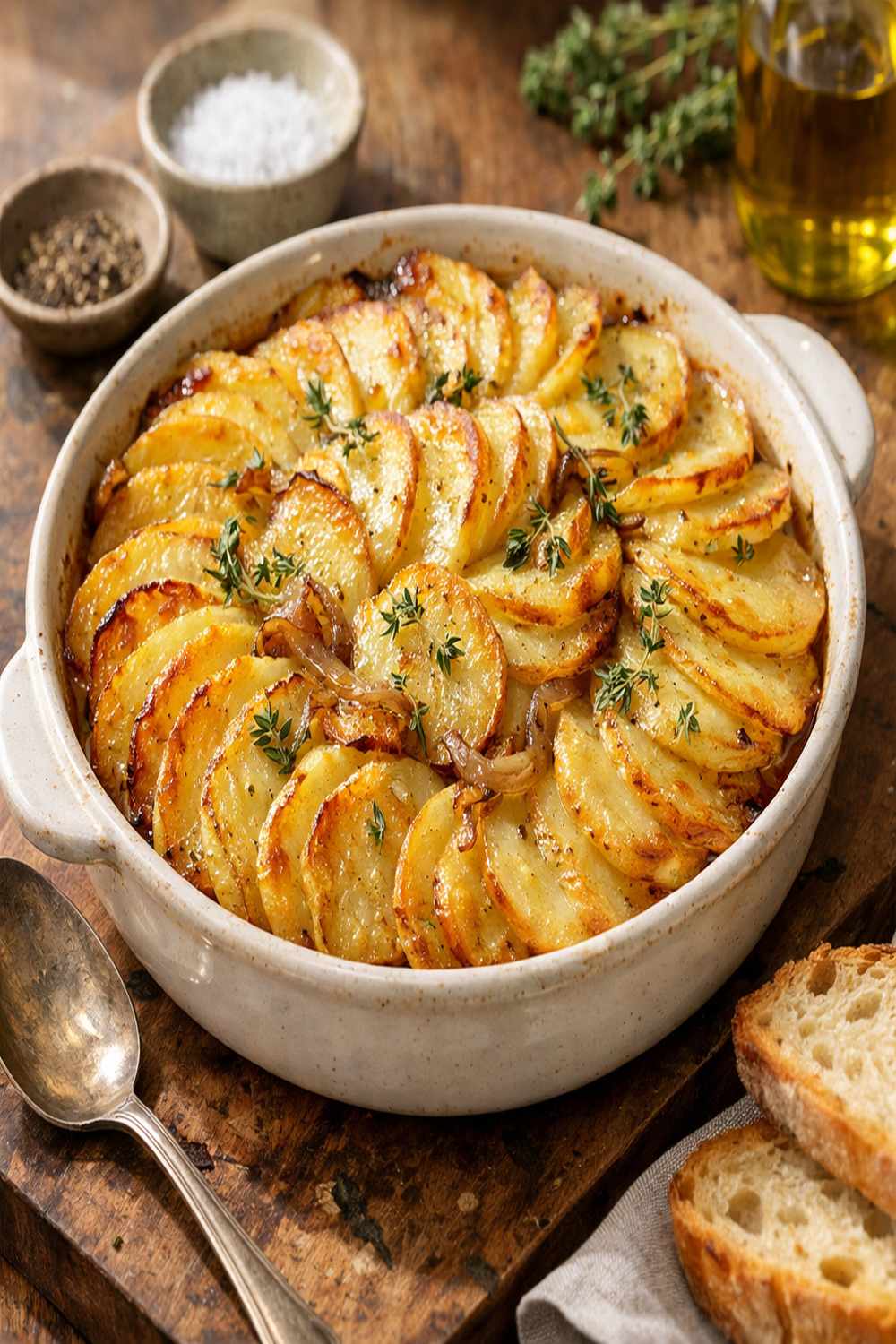
I discovered boulangere potatoes during my first winter in Juneau, when I realized that some of the most profound nutrition lessons come from the humblest ingredients. There’s something about watching potatoes—those resilient tubers that sustained my adopted Alaskan community through long, dark months—transform into something golden and silky that felt like magic. The French bakery tradition of layering thin potato slices with onions and stock mirrors the resourcefulness I’ve come to love in Alaska’s food culture: simple, whole ingredients creating nourishment that warms both body and spirit. This dish taught me that you don’t need exotic ingredients to eat well; you need intention, technique, and respect for what grows in your own backyard.
Authentic Boulangere Potatoes: The Story Behind the Recipe
My connection to this dish deepened when I worked with a French culinary mentor who spent her childhood watching her grandmother prepare boulangere in a cast-iron vessel near Lyon. She explained that the name itself—à la boulangère, “baker’s wife style”—originated because French bakers’ wives would prepare these potatoes in the communal village oven after the morning bread baked. It was an ingenious use of lingering heat and a way to stretch modest household stores into something elegant enough for Sunday dinner.
When I moved to Alaska, I recognized the same ethos: nothing wasted, everything maximized, cooking in ways that honor both tradition and geography. That French baker’s wife and the Alaska homesteader speak the same language of resourcefulness.
The History and Cultural Significance of Boulangere Potatoes
Boulangere potatoes emerged in mid-19th century France as part of the broader “à la” cooking tradition—dishes named after professions or places that reflected accessible, home-style cooking. Unlike haute cuisine techniques that demanded rare ingredients, this preparation celebrated what every French household possessed: potatoes, onions, stock, and butter.
The dish became particularly significant during periods of economic constraint, when potato-based meals sustained entire communities across Europe. Yet French culinary tradition elevated it beyond mere sustenance; boulangere represents the philosophy that technique and care transform ordinary ingredients into something worthy of the dinner table. This duality—humble ingredients treated with respect—resonates deeply with how I approach nutrition counseling today.
In professional culinary circles, boulangere represents a foundational technique for understanding layered cooking, even heat distribution, and how moisture interacts with starch. It appears in classic French culinary texts like Escoffier’s Le Guide Culinaire as proof that mastery isn’t always about complexity.
What Makes an Authentic Boulangere Potatoes Recipe
The difference between authentic boulangere and potato casserole variations comes down to three critical elements: the quality of slice consistency, the strategic layering pattern, and the precise liquid-to-potato ratio. Each of these exists for a reason rooted in food science and French tradition.
- Paper-thin, uniform potato slices – Traditional boulangere demands slices thin enough to see light through them (roughly 1/16 inch). This ensures even cooking, allows the starch to release gradually and thicken the broth into a silky sauce, and creates the texture contrast between crispy top and creamy interior. A mandoline (the tool, not the vegetable) is worth the investment; uneven slices create dry spots and undercooked centers.
- Intentional layering with onions between, not mixed through – Authentic recipes layer onions as distinct strata, not scattered throughout. This allows onion sweetness to infuse upward and downward through the potatoes during cooking, creating flavor depth that mixed approaches miss. The onions also create slight barriers that prevent potatoes from bonding into a dense, gluey mass.
- Light stock that becomes sauce, never a soup – The liquid should barely cover the potatoes initially. As they cook, starches release and thicken it into a delicate sauce. Too much liquid and you’ve made potato soup; too little and you’ve made baked potato chips. This balance is where technique shows.
- Butter dispersed throughout layers, not just on top – Traditional preparation places small knobs of butter throughout, not just as a finish. This distributes richness evenly, helps conduct heat to lower layers, and contributes to the creamy interior texture through emulsification.
The Ingredients – Sourcing the Real Thing
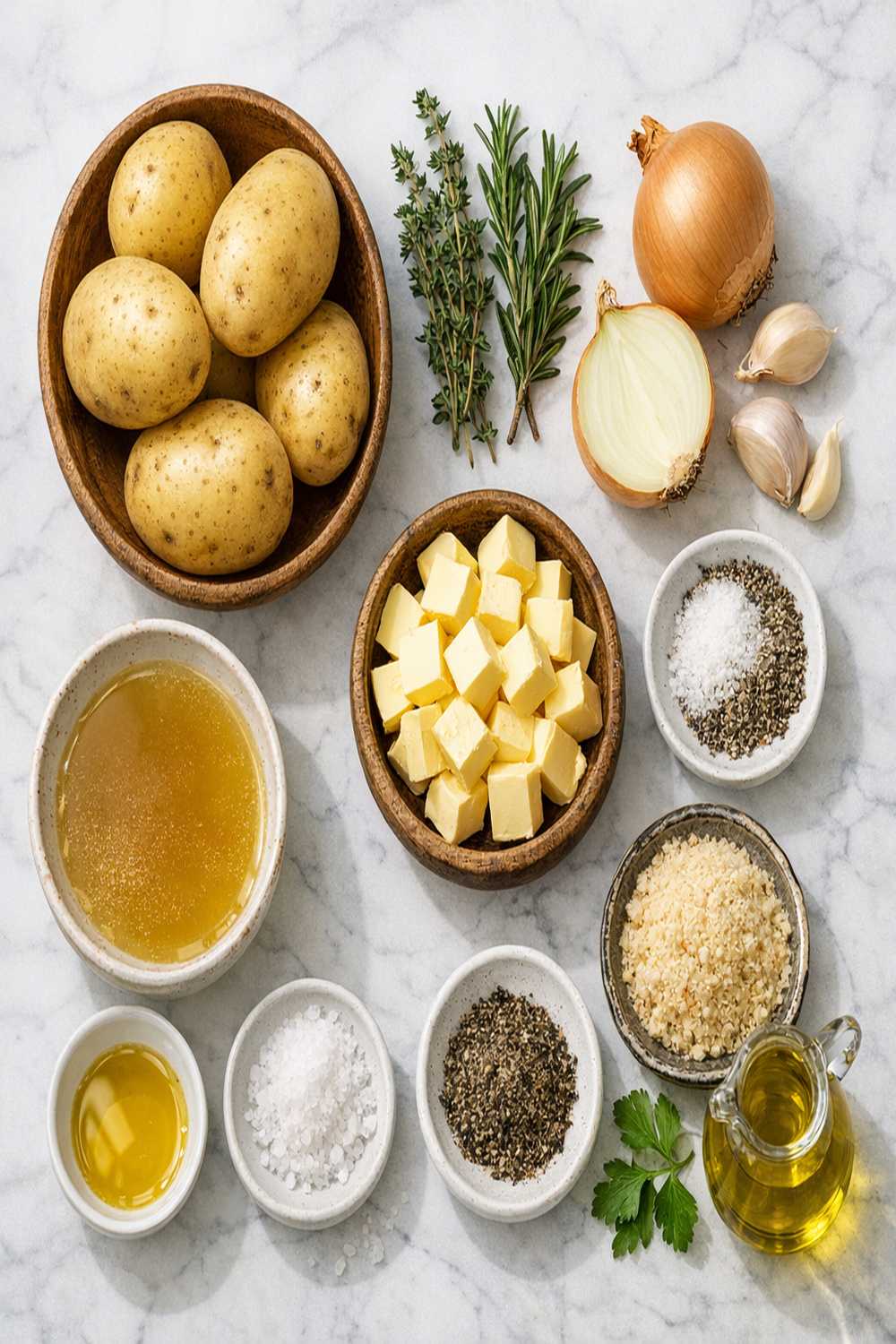
I want to be honest about ingredient sourcing: authentic boulangere doesn’t demand rare imports. It demands good versions of everyday items. Here in Alaska, I source these from my local co-op or farmers market when possible, and I’ve developed specific storage strategies that make them last longer and taste better. When authentic sources aren’t available, I’ve noted practical substitutes that honor the dish’s intent.
- 1 cup vegetable or light chicken stock (homemade preferred; store-bought should be low-sodium so you control seasoning)
- 1 teaspoon fine sea salt plus additional to taste
- 1½ tablespoons fresh thyme leaves stripped from stems (or 1½ teaspoons dried, though fresh is markedly superior)
- ½ teaspoon freshly ground black pepper plus additional to taste
- 2 pounds waxy potatoes like Yukon Gold or fingerling (starchy enough to release thickening starch, yet firm enough to hold their shape—avoid russets, which break down into mush)
- ½ cup sharp aged cheese like Gruyère, finely grated (optional addition that’s become common in modern French bistros)
- 2 tablespoons whole milk or light cream (optional but traditional; adds richness without heaviness)
- 1 large yellow onion (peeled and sliced paper-thin, about 1/16 inch—the sweetness develops during slow cooking)
- 4 tablespoons unsalted butter divided (European-style butter with higher fat content creates silkier sauce than standard American butter)
Expert’s Ingredient Storage Hack from Alaska Kitchen Experience
Potatoes and onions seem straightforward until they’re not. I keep potatoes in a cool, dark cupboard (never the fridge—cold converts starch to sugar and creates a grainy texture when cooked). They’ll last 3-4 weeks if stored separately from onions (onion ethylene gas accelerates potato sprouting). For this recipe specifically, I slice potatoes and onions just before cooking—no more than 15 minutes ahead. If you must prep earlier, place sliced potatoes in cold water with a squeeze of lemon juice to prevent browning, then drain completely before layering.
The Traditional Method: How to Make Authentic Boulangere Potatoes
I approach cooking as ritual, and boulangere especially rewards attention and presence. Each step builds on the previous one, and there’s no rushing. This method takes about 55-65 minutes total, including prep, but only 30 minutes involves active work.
Step 1: Prepare Your Oven and Equipment
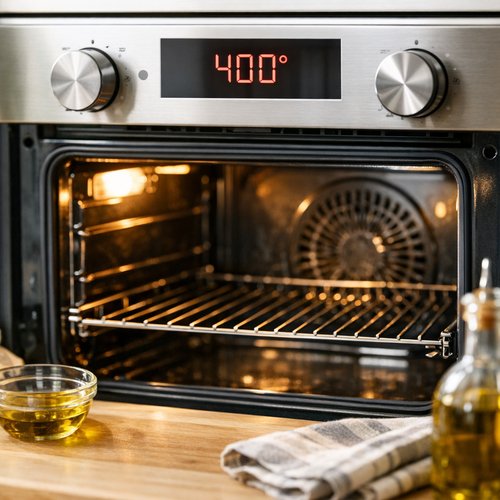
Set your oven to 400°F (or 180°C fan). This temperature is deliberate—hot enough to create a golden, slightly crispy top layer while remaining gentle enough to cook potato centers evenly. While the oven preheats, lightly butter a 9×9-inch baking dish with about ½ tablespoon of your butter, coating bottom and sides. This small gesture prevents sticking and helps the bottom layer brown. If you have an ovenproof skillet, that works beautifully too; cast iron distributes heat with particular evenness.
Step 2: Slice Your Potatoes and Onions with Precision
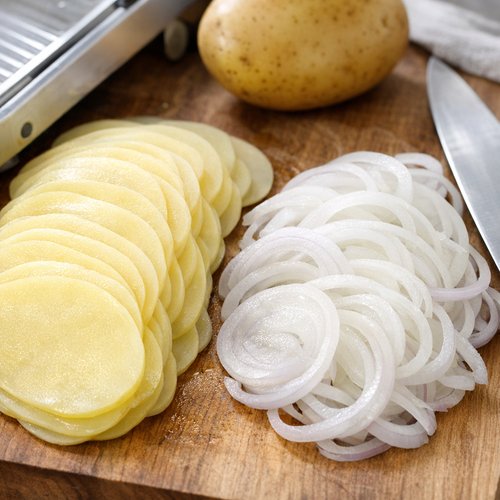
Using a mandoline or sharp knife, slice potatoes lengthwise into pieces roughly 1/16 inch thick—thin enough to be slightly translucent. Inconsistent thickness is the #1 mistake I see; uneven slices mean some pieces cook while others remain firm. Slice your onion the same thickness, separating the slices into rings. Pat both dry with a clean kitchen towel; excess moisture interferes with the caramelization process.
Step 3: Begin the First Layer—Onions First
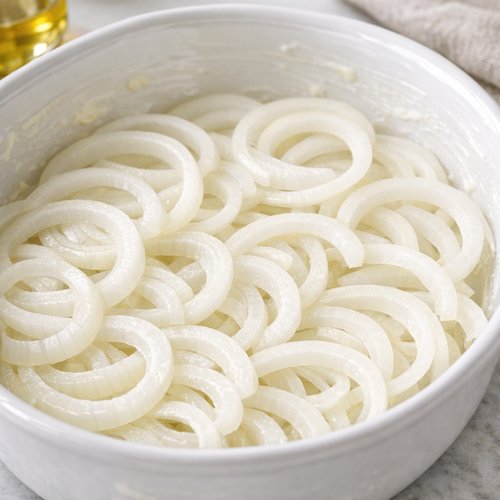
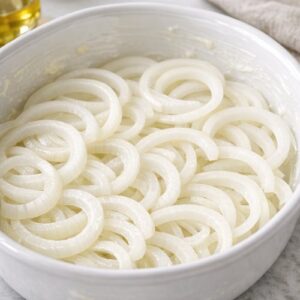
Arrange a thin layer of onion slices across your buttered baking dish, slightly overlapping. Don’t use more than one-quarter of your onion at this stage. This foundation layer infuses the entire dish with gentle sweetness. Sprinkle lightly with salt and pepper—roughly 1/8 teaspoon each—and scatter about 1/4 teaspoon of thyme leaves across the onion layer.
Step 4: Add Your First Potato Layer
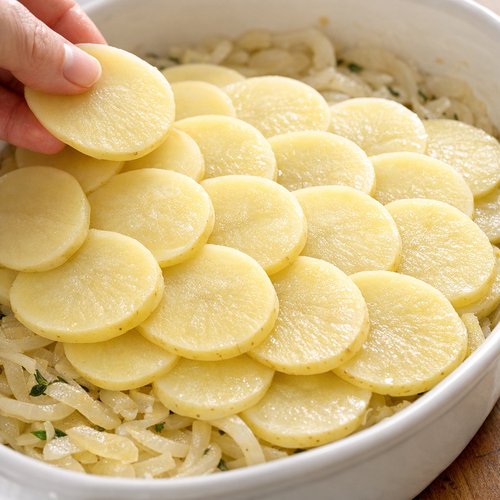
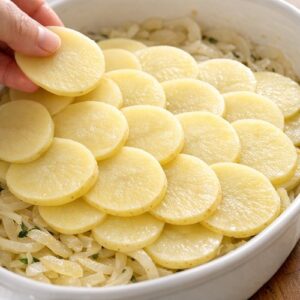
Over the onions, arrange a layer of potato slices in overlapping rows, as if you’re shingling a roof. This overlapping pattern ensures even heat distribution and creates visual appeal. Season this potato layer with salt and pepper, then dot with three or four small knobs of butter (about 1/4 tablespoon total). The butter should be distributed across the layer, not clustered in one spot.
Step 5: Continue Layering—Building Flavor and Texture
Repeat the pattern: onion layer, seasoning, thyme, then potato layer with butter. You’re building a structure that alternates between sweet (onion) and starchy (potato), with herbs and fat distributed throughout. Continue until your baking dish is full, finishing with a final layer of potatoes. I typically create 4-5 alternating layers in a standard 9×9 dish. The top should be a complete potato layer, shingled carefully; this becomes your golden crown once baked.
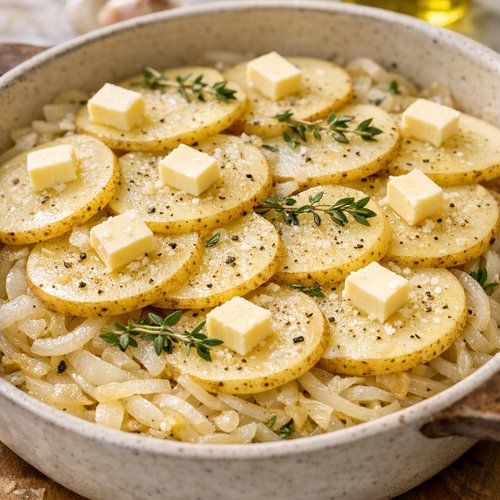
Step 6: Add the Stock and Final Butter
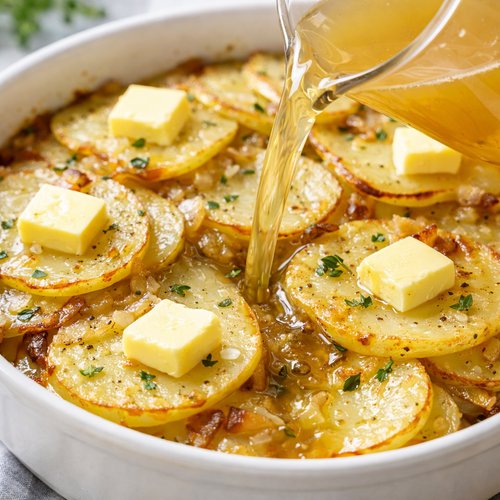
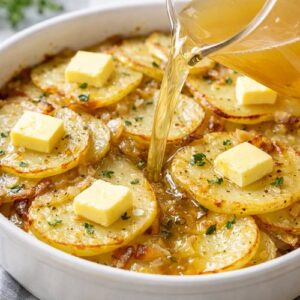
Here’s where precision matters: gently pour your room-temperature stock around the edges and into the gaps between potato layers. You want the liquid to come just below the top potato layer, about three-quarters of the way up the dish. Too much liquid and you create soup; too little and your bottom layers stay dry. If using cream, drizzle it across the top layer now. Place your remaining 1 tablespoon of butter (in small knobs) across the very top, then season the top layer with a final grind of salt and pepper.
Step 7: Cover and Begin Baking
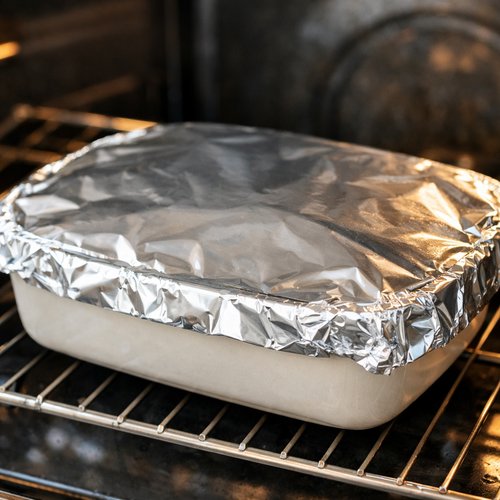
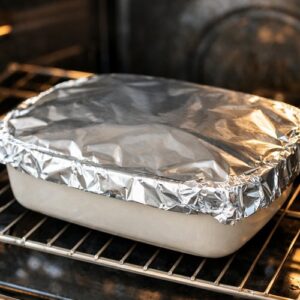
Cover your baking dish tightly with aluminum foil, shiny side down (the shiny side reflects heat and creates more even cooking). Place the covered dish on a baking sheet—this catches any drips and makes handling safer. Bake covered for 30 minutes. During this time, the liquid heats, potatoes begin softening, and steam created inside the foil gently cooks everything through.
Step 8: Uncover and Finish Baking Until Golden
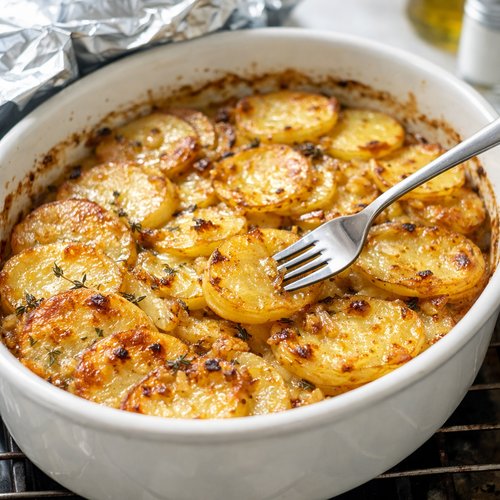
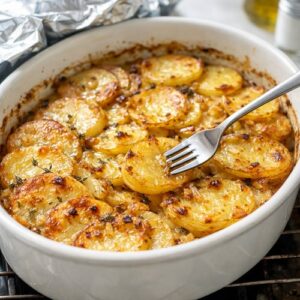
After 30 minutes, carefully remove the foil (watch for escaping steam). The potatoes should be mostly tender when pierced with a fork. Return to the oven uncovered for another 20-30 minutes, until the top layer is deep golden brown with some edges turning crispy. The exact time depends on your oven’s behavior; check at the 20-minute mark. You’re looking for contrast: creamy, tender interior with a golden, slightly crispy top.
Step 9: Rest Before Serving
Remove from the oven and let rest for 5-10 minutes before serving. This allows the starch to set slightly, making the dish easier to portion cleanly. The steam continues gently cooking the interior, and the temperature stabilizes to something you can actually eat without burning your mouth.
Common Mistakes to Avoid
In my work with clients learning traditional techniques, I notice patterns. Here are the four most common mistakes—and how to avoid them:
- Slicing potatoes too thick or inconsistently: This is the single biggest reason boulangere fails. Thick slices don’t cook evenly; you end up with a crunchy top and raw center. Invest in a mandoline or practice your knife skills. Consistency matters more than perfect thinness.
- Using russet potatoes instead of waxy varieties: Russets break down during cooking and create a mealy, separated texture. Yukon Golds and fingerlings have just enough starch to thicken the sauce while maintaining their shape. Don’t substitute.
- Adding all the liquid at once instead of pouring gently: Violent pouring disrupts your carefully arranged layers. Pour slowly around the edges, allowing liquid to settle gradually. This prevents your artfully shingled potatoes from shifting.
- Skipping the foil cover or removing it too early: The foil creates steam that ensures even cooking. Removing it before 30 minutes means dry, undercooked bottom layers. Patience pays off.
Regional Variations Around the World
- Provence (France): Southern French versions add garlic (minced fine and scattered between layers), sometimes a pinch of nutmeg, and occasionally anchovies thinly sliced between the onion layers. This reflects Provence’s broader Mediterranean flavor profile. The technique remains identical; only aromatics shift.
- Catalonia (Spain): Spanish cooks prepare a similar dish called “patatas a la boulangère” but often incorporate smoked paprika instead of thyme, creating a deeper, earthier flavor. Some versions include Spanish ham or chorizo, turning it into a more protein-forward dish. The cooking method stays consistent.
- Germany and Central Europe: Germanic versions, sometimes called “Schichtkartoffeln” (layered potatoes), frequently include sauerkraut between layers, adding tang and digestive benefits. Caraway seeds sometimes replace or accompany thyme. The acidic sauerkraut provides brightness that balances richness.
Traditional Serving Customs
In France, boulangere potatoes are served as an accompaniment to roasted or braised meat—particularly beef braises, chicken, or lamb. They appear on Sunday dinner tables and restaurant menus as a mark of respect for technique, not as a main course. The portioning is modest (roughly 3/4 cup per person as a side), meant to round out a plate where protein takes focus. This reflects the historical context: boulangere as a way to stretch modest means, not a celebration of potatoes themselves.
The dish is traditionally served family-style, brought to the table in its baking dish and portioned directly onto individual plates or into shallow bowls. This presentation showcases the golden top and allows the creamy interior to be visible as you serve. It’s a humble presentation that nonetheless conveys care. The warmth should be maintained throughout the meal; boulangere is never served at room temperature, and leftovers are gently reheated.
In modern practice, particularly in bistro settings, you’ll see boulangere plated individually with a portion of protein, sometimes accompanied by a simple salad dressed with healthy honey mustard dressing to cut the richness. This feels entirely authentic to how contemporary French cooks approach it.
Can I Store Boulangere Potatoes?
Yes, with proper technique. Cooled boulangere keeps well, though texture shifts slightly upon reheating. Here’s my professional guidance:
Refrigerator Storage: Allow the dish to cool completely to room temperature (about 30 minutes), then cover tightly with plastic wrap or transfer to an airtight container. Boulangere keeps refrigerated for up to 3 days. The potato-starch-thickened sauce actually develops deeper flavor after sitting, making day-two versions sometimes superior to day-one.
Reheating: To restore texture, reheat gently in a 350°F oven, covered with foil, for about 20 minutes until warmed through. Alternatively, reheat individual portions in a microwave (though this is less elegant, it works). Avoid boiling or high-heat reheating, which breaks down the delicate potato structure.
Freezing: While technically possible, I don’t recommend freezing boulangere. Freezing damages potato cell structure, creating a mealy texture upon thawing. If you must freeze, do so for no longer than 1 month, and plan to use thawed portions in a gratin or soup rather than serving as the original dish.
Make-Ahead Strategy: You can prepare your dish entirely up to the point of baking: arrange all layers in your baking dish, add stock, dot with butter, cover with foil, and refrigerate for up to 12 hours. Bake directly from the fridge; simply add 10 minutes to the initial covered baking time since the dish starts cold.
Nutrition Information
Per serving (based on 4 servings per batch): approximately 280 calories, 12g fat (8g saturated), 38g carbohydrates, 4g fiber, 5g protein, and 480mg sodium. According to USDA data, this composition reflects the natural nutrient density of whole potatoes.
What interests me most, professionally, is what boulangere reveals about potato nutrition that we often overlook. Potatoes frequently get vilified in modern diet culture, yet they’re genuinely nourishing. The resistant starch that develops as potatoes cool (even slightly) feeds beneficial gut bacteria. The potassium content—about 15% of daily value per serving—supports cardiovascular health, something particularly relevant in my Alaskan clients managing long winters and high stress. The fiber in potato skin (which we keep on fingerling varieties) supports digestive function.
The onions add polyphenols, compounds with documented anti-inflammatory properties. The thyme contributes thymol, a volatile oil with antimicrobial qualities. Even the butter, when used in modest amounts as traditional recipes do, provides fat-soluble vitamins (A, D, K) that help absorb other nutrients. This isn’t a low-calorie dish, but it’s a thoughtfully composed one where each ingredient contributes beyond mere flavor.
The traditional French approach—modest portions as a side, not a center of the plate—naturally controls caloric intake while maximizing nutritional benefit. When I counsel clients, I often use boulangere as an example of how tradition sometimes reflects nutritional wisdom before nutritional science could explain it.
What Can I Serve With Boulangere Potatoes
Boulangere is fundamentally a side dish, which means it needs proper accompaniments. Here’s what works, rooted in French tradition and expanded through my Alaskan experience:
- Roasted or braised beef: This is the classic pairing. A beef braise, where meat simmers in wine and stock, creates deep, rich flavors that boulangere’s creamy richness complements perfectly. The potatoes soak up any sauce from the meat.
- Pan-seared salmon or halibut: Alaskan tradition meets French technique. The bright, delicate fish contrasts beautifully with the earthy potato richness. A squeeze of lemon on the fish cuts through the butter beautifully.
- Herb-roasted chicken: Whether whole roasted or individual pieces, chicken’s mild flavor allows boulangere to shine as a supporting player rather than competing for attention.
- Lamb steaks or rack of lamb: Lamb’s richness pairs spectacularly with potatoes cooked in their own rendered starch and butter. Add rosemary instead of thyme, and you’ve created a harmonious progression of flavors.
- Simple green salad: Always serve a light salad alongside to cut richness and provide contrast. Even a basic arugula salad with healthy honey mustard dressing provides brightness and acidity that balance the richness perfectly.
- Roasted or steamed seasonal vegetables: Asparagus in spring, green beans in summer, roasted carrots in fall. Simple preparations highlight their natural sweetness against the creamy potatoes.
- Crusty bread: The creamy sauce created by boulangere is too good to waste. Crusty bread for dipping is never wrong and reflects how actual French meals happen.
I rarely serve boulangere without protein, as the dish truly is a supporting actor. But when I do—occasionally as part of a vegetable-forward dinner—I’ll add extra herbs, maybe some grated cheese, and serve it alongside roasted mushrooms and a rich tomato sauce, almost like a vegetarian gratin.
Seasonal Variations and Adaptations
While boulangere is traditionally autumn and winter comfort food, I’ve developed seasonal variations that keep the essential technique intact while honoring what’s available each season:
Spring Version: Add thin-sliced leeks (softer, more delicate than onions) and scatter fresh tarragon or chervil between layers instead of thyme. Include a handful of fresh sorrel if available—its lemony bite provides spring brightness. The technique remains identical; only aromatics shift.
Summer Preparation: Use summer savory instead of thyme; include paper-thin slices of garlic scape between onion layers. Consider adding a thin layer of summer squash (zucchini or yellow squash sliced thin) in one layer for color and variety. The cooking time may decrease slightly as lighter vegetables cook faster.
Fall and Winter (Classic Version): This is when boulangere truly shines. Increase butter slightly, add a pinch of ground nutmeg to the top layer, and consider incorporating aged cheese (Gruyère or sharp cheddar) grated between the final potato layers. This is the version I make most frequently as September nights cool in Alaska.
Herb Variations by Season: Replace thyme with sage in fall, oregano in summer, chervil in spring. Each herb subtly shifts the flavor profile while maintaining the dish’s essential character. I keep dried versions of multiple herbs on hand specifically to adapt recipes seasonally.
Seasonal Ingredient Sourcing
Here in Alaska, potatoes store remarkably well from summer harvest through spring. I purchase substantial amounts in early fall when local farmers bring them to market, store them in cool conditions, and have excellent potatoes available for months. This allows me to make boulangere in December with truly local, seasonal ingredients—something I treasure. Onions similarly keep for months with proper storage, as do thyme and other dried herbs from my garden harvest.

Boulangere Potatoes Recipe
Ingredients
Method
- Set your oven to 400°F (or 180°C fan). This temperature is deliberate—hot enough to create a golden, slightly crispy top layer while remaining gentle enough to cook potato centers evenly. While the oven preheats, lightly butter a 9x9-inch baking dish with about ½ tablespoon of your butter, coating bottom and sides. This small gesture prevents sticking and helps the bottom layer brown. If you have an ovenproof skillet, that works beautifully too; cast iron distributes heat with particular evenness.

- Using a mandoline or sharp knife, slice potatoes lengthwise into pieces roughly 1/16 inch thick—thin enough to be slightly translucent. Inconsistent thickness is the #1 mistake I see; uneven slices mean some pieces cook while others remain firm. Slice your onion the same thickness, separating the slices into rings. Pat both dry with a clean kitchen towel; excess moisture interferes with the caramelization process.
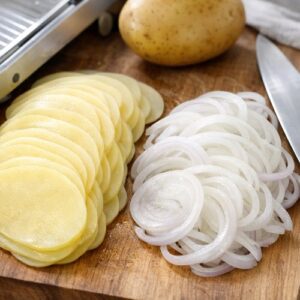
- Arrange a thin layer of onion slices across your buttered baking dish, slightly overlapping. Don't use more than one-quarter of your onion at this stage. This foundation layer infuses the entire dish with gentle sweetness. Sprinkle lightly with salt and pepper—roughly 1/8 teaspoon each—and scatter about 1/4 teaspoon of thyme leaves across the onion layer.
- Over the onions, arrange a layer of potato slices in overlapping rows, as if you're shingling a roof. This overlapping pattern ensures even heat distribution and creates visual appeal. Season this potato layer with salt and pepper, then dot with three or four small knobs of butter (about 1/4 tablespoon total). The butter should be distributed across the layer, not clustered in one spot.
- Repeat the pattern: onion layer, seasoning, thyme, then potato layer with butter. You're building a structure that alternates between sweet (onion) and starchy (potato), with herbs and fat distributed throughout. Continue until your baking dish is full, finishing with a final layer of potatoes. I typically create 4-5 alternating layers in a standard 9x9 dish. The top should be a complete potato layer, shingled carefully; this becomes your golden crown once baked.
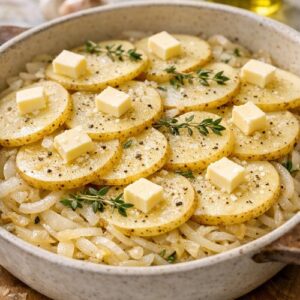
- Here's where precision matters: gently pour your room-temperature stock around the edges and into the gaps between potato layers. You want the liquid to come just below the top potato layer, about three-quarters of the way up the dish. Too much liquid and you create soup; too little and your bottom layers stay dry. If using cream, drizzle it across the top layer now. Place your remaining 1 tablespoon of butter (in small knobs) across the very top, then season the top layer with a final grind of salt and pepper.
- Cover your baking dish tightly with aluminum foil, shiny side down (the shiny side reflects heat and creates more even cooking). Place the covered dish on a baking sheet—this catches any drips and makes handling safer. Bake covered for 30 minutes. During this time, the liquid heats, potatoes begin softening, and steam created inside the foil gently cooks everything through.
- After 30 minutes, carefully remove the foil (watch for escaping steam). The potatoes should be mostly tender when pierced with a fork. Return to the oven uncovered for another 20-30 minutes, until the top layer is deep golden brown with some edges turning crispy. The exact time depends on your oven's behavior; check at the 20-minute mark. You're looking for contrast: creamy, tender interior with a golden, slightly crispy top.
- Remove from the oven and let rest for 5-10 minutes before serving. This allows the starch to set slightly, making the dish easier to portion cleanly. The steam continues gently cooking the interior, and the temperature stabilizes to something you can actually eat without burning your mouth.
Notes
FAQs
Can I make boulangere without cream or butter?
Technically, yes, but you’re moving away from authenticity. Butter is traditional and necessary for texture and flavor development. The fat helps create the silky sauce through emulsification of starch and liquid. However, if dietary needs require reduced fat, you can use clarified butter (which is just the fat, no milk solids) to reduce dairy while maintaining fat content. Alternatively, use just 2 tablespoons total butter and rely more on the starch-thickened sauce. The dish will be lighter but less authentically boulangere. Consider whether a different recipe might better serve your needs.
Why does my boulangere have a watery bottom and crispy top but not connect as a cohesive dish?
This indicates your potatoes sliced inconsistently or you used russet potatoes. Waxy potatoes release starch gradually as they cook, thickening the liquid into sauce. Russets release starch too quickly and heavily, creating separation. Additionally, if your oven temperature was too high, the top may have cooked faster than the interior. Ensure you’re using Yukon Gold, fingerling, or similar waxy varieties, sliced uniformly thin. Bake at exactly 400°F. The sauce should be creamy, not soupy or completely dry.
Can I use chicken or beef stock instead of vegetable stock?
Absolutely. Traditional French boulangere sometimes uses light chicken stock for subtle richness. Beef stock creates a deeper flavor that pairs beautifully with beef mains. However, avoid using full-strength beef stock, which can overwhelm the delicate potato flavor. I typically use vegetable stock as the neutral base that lets potatoes shine, or a light chicken stock if serving with poultry. Whichever you choose, ensure it’s low-sodium so you control the final salt level.
Why is my boulangere mushy and falling apart instead of holding layers?
This happens when you use russet potatoes (which break down quickly) or overcook the dish. Check your oven temperature; if it’s hotter than 400°F, the dish finishes faster and risks overcooking interior layers. Additionally, if you add boiling stock instead of room-temperature, it can shock and break down potatoes prematurely. Use waxy potatoes, room-temperature stock, and precise timing. The final texture should show distinct potato layers, creamy interior, crispy top.
Can I scale this recipe up for a large gathering?
Yes, though with careful planning. Double or triple the ingredient quantities, but don’t use proportionally larger cookware; use multiple baking dishes instead. A single dish deeper than 2 inches will have cooked edges before the center reaches tender. Three 9×9 dishes bake more evenly than one 13×18. Arrange them on multiple racks, swapping halfway through baking for even cooking. You’ll need to add 5-10 minutes to the cooking time since multiple dishes in the oven create a different heat environment. Test with a fork; your layers should be completely tender.
Is there a dairy-free version of boulangere I can make?
The challenge is that butter is technically required for both flavor and proper sauce development through emulsification. A vegan substitute like coconut oil creates a different flavor profile entirely. If you must cook dairy-free, use high-quality olive oil (about 4 tablespoons, drizzled between layers and dotted on top) instead of butter. Use vegetable stock. The dish will be lighter and lack the richness of traditional boulangere, but it’s a reasonable adaptation. Some people also add a touch of nutritional yeast (about 2 tablespoons sprinkled between layers) for savory depth. You’re essentially making a different dish that honors boulangere’s technique but respects your dietary needs.
Make-Ahead Guide for Busy Weeknights
I developed this make-ahead strategy specifically for clients balancing work and family. It preserves authenticity while acknowledging real-life constraints:
Day Before (Or Up to 12 Hours Prior): Slice potatoes and onions. Place potatoes in a bowl of cold water with a squeeze of lemon juice to prevent browning; refrigerate. Keep onions in a separate container, covered. This prep takes about 15 minutes and is the most time-intensive step of actual cooking.
2 Hours Before Serving: Remove potatoes from water, pat completely dry with paper towels (water prevents proper layering and browning). Arrange your baking dish with all ingredients exactly as the recipe instructs: onion layer, potato layer, herbs, butter, alternating until full. Add stock, dot with final butter, season top layer. Cover with foil and refrigerate. This takes about 12 minutes of active time.
Cooking Time: When you’re ready to bake, place the cold boulangere directly in a preheated 400°F oven. Add 10 minutes to the initial covered baking time (so 40 minutes covered instead of 30). Then uncover and bake 20-30 minutes more as the recipe instructs. Total baking time expands from 50-60 minutes to roughly 60-70 minutes when starting cold, but the preparation is genuinely complete before you walk in the door.
This approach means you can prep in the morning, return home to a minimal-fuss dinner, and have something genuinely nourishing on the table within 90 minutes of arriving home. The slight extra baking time is entirely worth the peace of mind.
More Recipes From This Tradition
- Crispy Baked Potato Wedges – A simpler potato preparation that celebrates tuber texture with roasting
- this cozy soup – Similar layered vegetable cooking technique, applied to a warming soup
- Vegetarian Enchilada Casserole – Another layered comfort dish that shares boulangere’s philosophy of building flavor through careful arrangement
Final Thoughts: Cooking as Tradition
Boulangere potatoes represent something I return to constantly in my work as a dietitian: the idea that nourishment emerges from care, not complication. The French baker’s wife who created this dish and the Alaskan homesteader adapting it both understood that good food requires intention and presence, not necessarily rare ingredients or complicated techniques.
When you make this dish, you’re not just cooking dinner. You’re honoring a tradition that says: your time matters, whole ingredients matter, technique matters, and the people you’re feeding deserve to feel that care on their plate. That’s nutrition at its deepest level. That’s why I keep coming back to recipes like this, even as nutrition science evolves and food trends shift.
The next time you have a quiet evening and want to practice proper knife skills, build layered flavor, and emerge with something genuinely nourishing and beautiful, make boulangere potatoes. Your home will smell like clarity. Your dinner table will feel like a small ceremony. And your body will thank you for the whole, real ingredients you’ve carefully prepared.
Happy Cooking!